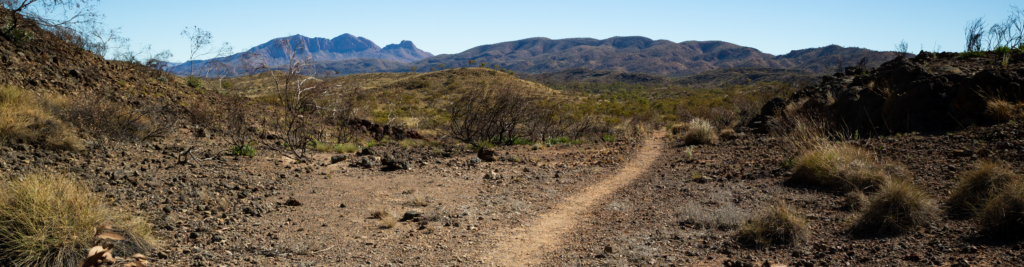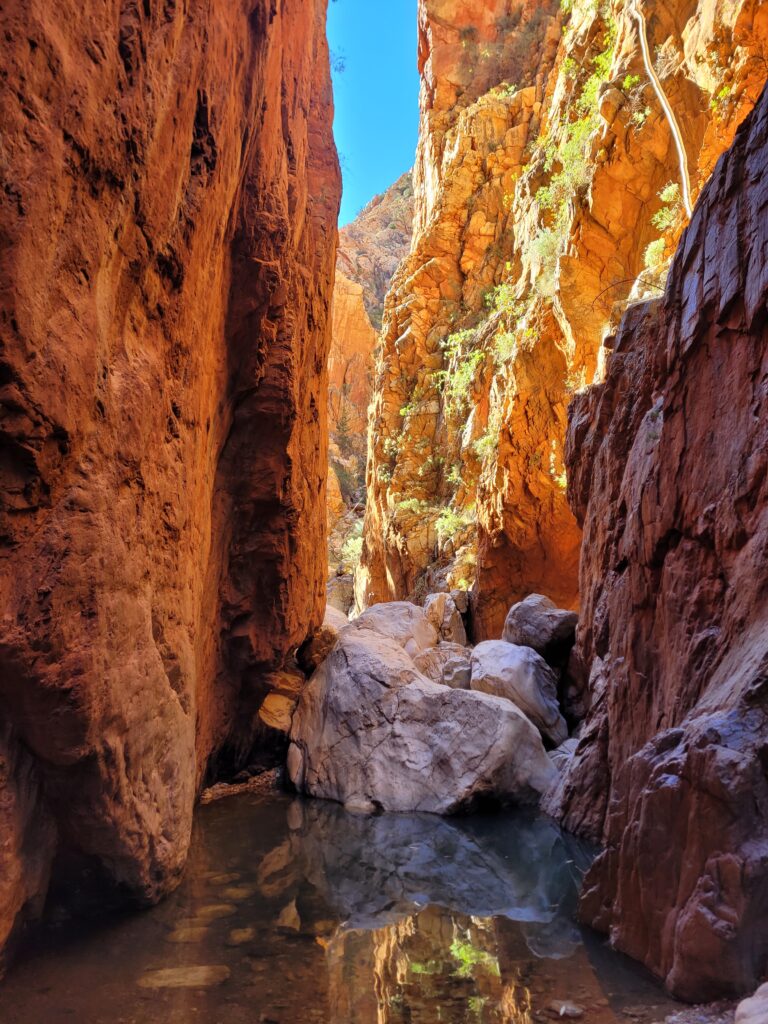

Ready for today’s Christmas creature? Let’s dive in! This festive season, Norther is taking you across the Territory to meet the animals and landscapes that make the NT feel truly magical. Today’s spotlight goes to one of the cutest locals you’ll find tucked among the rugged ranges: the Black-Flanked Rock-Wallaby.
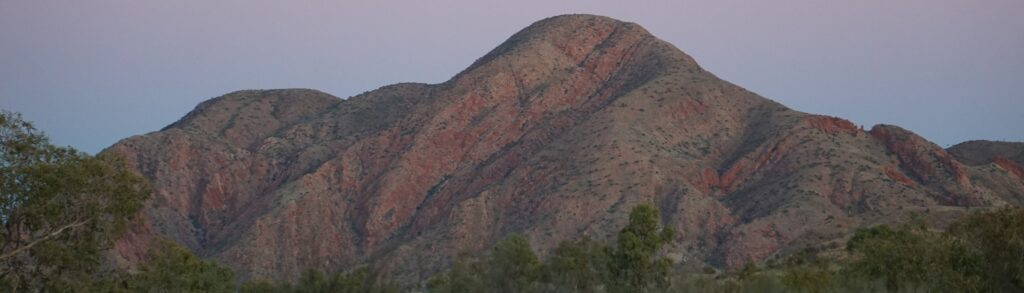
Often seen perched on rocky outcrops or bounding between boulders, these shy and agile wallabies are right at home in the dramatic scenery of West MacDonnell National Park. And if you’re lucky enough to spot them at sunrise, you’ll witness one of the most breathtaking moments the Red Centre has to offer—nature’s Christmas gift wrapped in pastel light.
Want to know all about planning your trip to West MacDonnell National Park? Scroll to the bottom of the post to see which site locals use to book hotels, where trusted travelers book tours, and how to find the best flight deals. Or Click Here to be taken there now.
The Black-flanked Rock Wallaby
COMMON NAME: Black-Flanked Rock Wallaby
SCIENTIFIC NAME: Petrogale lateralis
TYPE: Mammal
DIET: Herbivore
SIZE: 50 centimetres tall
What does the Black-Flanked Rock Wallaby look like?
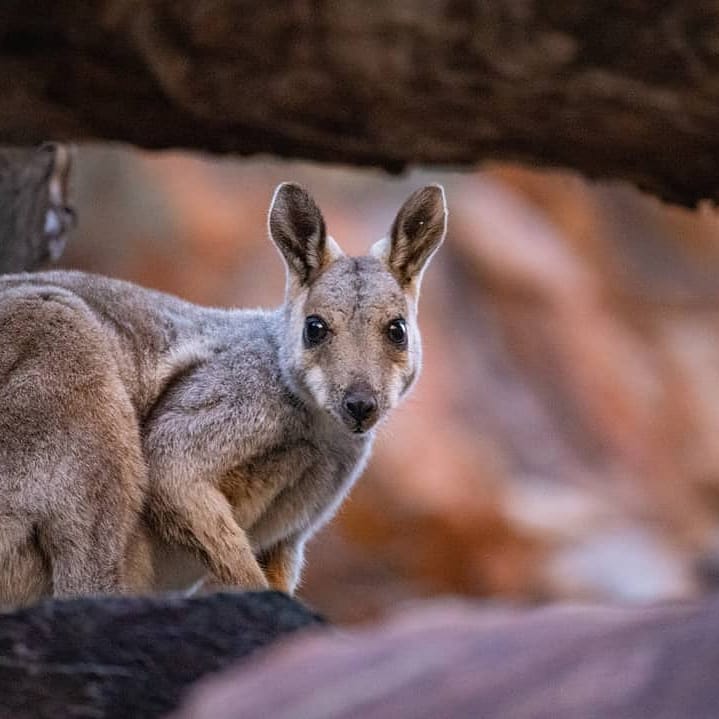
The Black-Flanked Rock Wallaby is also known as a Black-Footed Rock Wallaby. This is due to a black stripe that extends from between the ears to just below the shoulders. It is paler on the chest and dark brown on the belly.
Their tiny faces are dark with a white or sandy-brown cheek stripe. (A little spooky, right?!) They have a thick and woolly coat around the rump, flanks and base of the tail. There are colour variations between the subspecies.


Where does the Black-Flanked Rock Wallaby Live?
Keep your eyes peeled for the shy but fast black-flanked rock-wallaby. This adorable little animal is usually found darting among the rocky West MacDonnell National Park outcrops.
Historically this animal has been patchily distributed in central and southern Western Australia. In winter, you might catch it sunbathing and it is a sight like no other! It prefers to live among the rocks as this is essential to the wallaby’s survival. Wallabies live in groups called mobs.
Mobs of black-flanked rock wallabies can range in size from 10 to 100 individuals.
Habitat destruction, predation by foxes and feral cats, and competition for food and shelter have exacted a terrible toll. Scientists report many local extinctions and the wallaby’s distribution is now greatly reduced.
What does the Black-Flanked Rock Wallaby Eat?
Rock-wallabies are generally crepuscular and nocturnal, meaning they are most active at twilight and at night.
At dusk, they emerge to feed on a variety of grasses, herbs, barks, leaves, seeds and fruit. They tend to browse close to rocky refuges to provide a quick escape from predators.
Black-Footed Rock Wallaby is preyed upon by dingoes and foxes so they have to be on the lookout.

West MacDonnell National Park
Known as Tjoritja by the Traditional Owners, the area is integral to the local Aranda Aboriginal culture. This exciting land is an adventurer’s dream come true!
It has camping, swimming, hiking, epic sunsets and sunrises. To top it all off it has gorges that are home to a variety of plants and animals, some of which are remainders of a bygone era of tropical forests, relics unique to the area.
What to do in West MacDonnell National Park?
Filled with lots to do, West MacDonell National Park is one of the jewels of the Red Centre. There are trails for casual and avid walkers, including the famous Larapinta Trail! This trail runs through the heart of Central Australia and extends over 230 kilometres. It is divided into 12 sections with each taking a day or two. It covers the most beautiful spots in the park and is a great way to see it all!
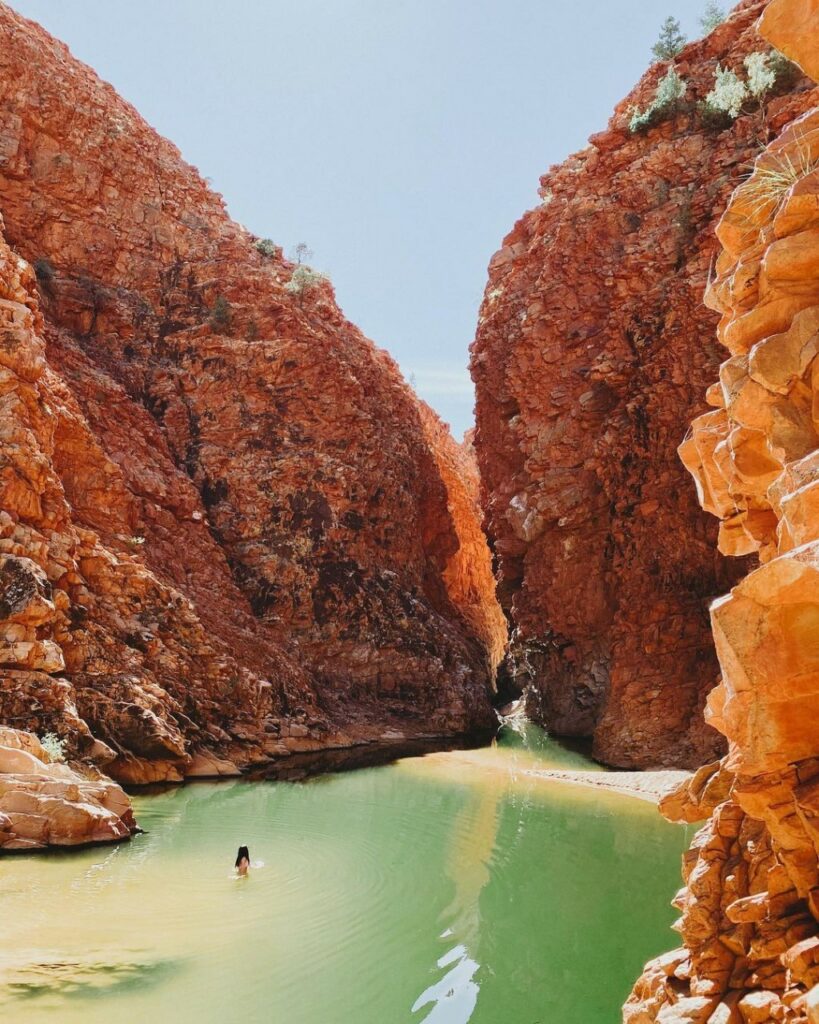
The Park’s epic spots include the Simpsons Gap, Ellery Creek Big Hole, Ormiston Gorge, Glen Helen and Mount Sonder all of which are along the trail! The beauty of the park will knock your socks off, especially Ellery Creek Big Hole! It is a spectacular waterhole in Ellery Creek that cuts through gorges in the West MacDonnell Ranges. It is perfect for walking and swimming. and picnicking.
For more ideas, see our 3-day West Macs Itinerary.
When is the Best Time to Visit West MacDonnell National Park?
West MacDonnell National Park is stunning year-round, but the experience you’ll have can vary dramatically depending on the season.
The most popular—and comfortable—time to visit is during the dry season, from May to October. Days are warm, nights are cool, and the lower humidity makes hiking, swimming, and sightseeing a breeze. This is also when the park’s iconic locations—like Ormiston Gorge, Standley Chasm, and Ellery Creek Big Hole—truly shine, with crystal-clear skies, vivid colours, and ideal outdoor conditions.
The wet season, from November to April, brings intense heat, higher humidity, and occasional storms—but it also transforms the park in surprising ways. Waterholes brim with fresh rainwater, wildflowers appear, and the desert feels alive. It’s a more challenging time to explore due to extreme temperatures and the possibility of road closures, so it’s recommended only for experienced travellers who are well prepared. If you do venture out, plan activities for early morning and always check conditions before heading off.
The shoulder seasons, April and October, can also offer beautiful travel windows. While temperatures begin to climb, crowds are thinner, and the landscapes still look incredible. Sunrise and sunset become especially dramatic at this time of year, casting deep purples, reds, and golds across the ranges. If you don’t mind early starts and late-afternoon adventures, you’ll be rewarded with spectacular photo opportunities and a quieter park.
No matter when you visit, West MacDonnell National Park delivers incredible beauty—just choose the season that best suits your travel style.
Remember to pack your sense of adventure, respect for nature, and an open mind as you set out to discover the West MacDonnell Ranges. Leave only footprints behind as you traverse the trails and immerse yourself in the pristine wilderness. We would love your feedback – we encourage you to share your experiences, questions, and suggestions in the comments below.
You can always get more inspiration for other National Parks to visit by following @northerhq or get your West MacDonnell National Park daily fix @westmacdonnellnationalpark on Instagram or at our Facebook page.
Heading to the NT? Here’s What You Need to Get Started
Travel Insurance
Whether you’re from Australia or across the globe, it’s a great idea to get insurance to cover unexpected accidents or medical emergencies. AllClear and Cover More are our favourite travel insurance providers to give us the peace of mind while heading to the outback.
Flights
For the best deals on flights, we recommend using Trip.com. It’s super easy to compare prices across different airlines and booking sites. I always find great options for my trips, and it saves me so much time and money!
Hotels
We always recommend using Booking.com for hotels. They have a variety of accommodation options and great filters to help you find the perfect place for your trip to the NT. With amazing deals, a great loyalty program, and the largest selection of hotels and rentals, it’s our favourite place to book rooms.
Tours
Tours, either multi-day, half-day, or private excursions, are a great way to experience the NT. Viator has a great selection of activities to help you travel the Territory and learn from locals.
Car Rental
If you're looking to rent a car to explore the Territory on your own, we suggest checking out Budget. It’s so easy to compare prices and find the best option from their huge selection of cars. Or try Rentalcars.com to see cars from all rental companies in the NT.
National Parks Pass
If you live outside the NT and plan on visiting national parks, you'll need a Parks pass. Choose from a day pass, a 2-week pass, 12-month pass, or family pass at NT.gov.au. If you're an NT resident be sure you bring your NT driver licence or proof of residency. Note: Park Passes are not accepted at Kakadu or Uluru-Kata Tjuta National Parks. Purchase those from Parks Australia.
Sim Card
If you're travelling and need a reliable connection, We'd recommend getting an eSIM from Airalo. Choose from data only or cellular connection. It’s super convenient and helps you stay connected without the hassle of swapping physical SIM cards or paying exorbitant fees to your wireless provider.