
This Christmas season, we’re sharing a festive series all about Darwin and the Northern Territory—its stories, its characters, and the uniquely Top End magic you won’t find anywhere else. And of course, we couldn’t celebrate a Darwin Christmas without featuring one of its most iconic locals.
From tidal rivers to wide-open floodplains, these ancient predators are part of the Territory’s identity. So grab your Christmas spirit (and keep your hands inside the boat)—today’s spotlight is on the legendary saltie.
Want to know all about planning your trip to the NT? Scroll to the bottom of the post to see which site locals use to book hotels, where trusted travelers book tours, and how to find the best flight deals. Or Click Here to be taken there now.
Saltwater Crocodile (Saltie) in Darwin
COMMON NAME: Saltwater Crocodile
SCIENTIFIC NAME: Crocodylus porosus
TYPE: Reptile
DIET: Carnivore
SIZE: 6-7 m and weigh over 1,000kg
Did you know that the Saltwater Crocodile is the largest reptile on the planet? ON THE ENTIRE PLANET!
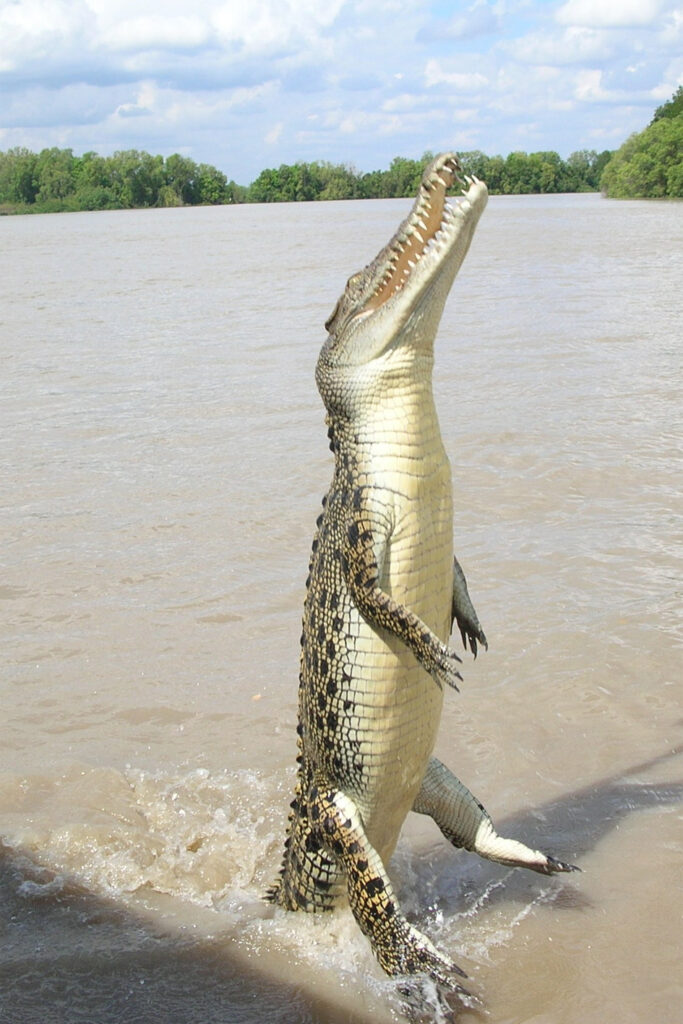
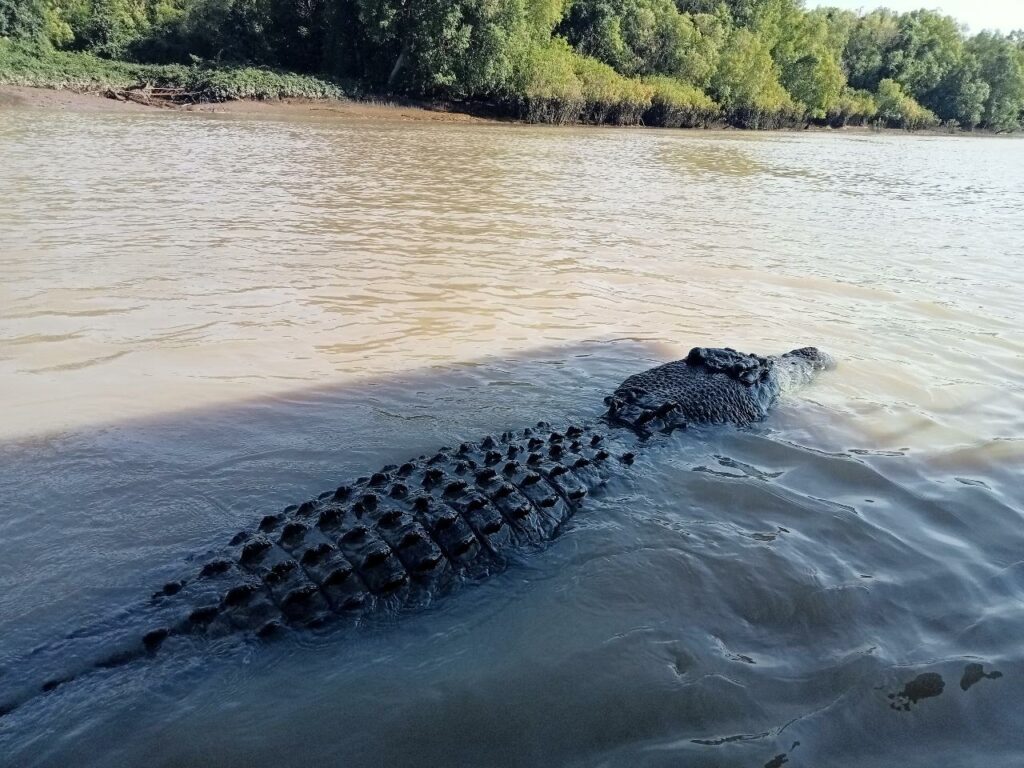
The male Saltwater Crocodiles have been recorded to be as long as 7 m and are estimated to have weighed a staggering 1500-2000kg. (Crickey!) The females are much smaller, growing to be about only 3 m and weighing about 150 kg. The heads are quite large and feature a pair of ridges that run from the eyes along the centre of the snout. Their scales are oval and the scutes (bony plates) are small compared to other species. The young Saltwater Crocodiles are pale yellow in colour with black stripes and spots on the body and tail.
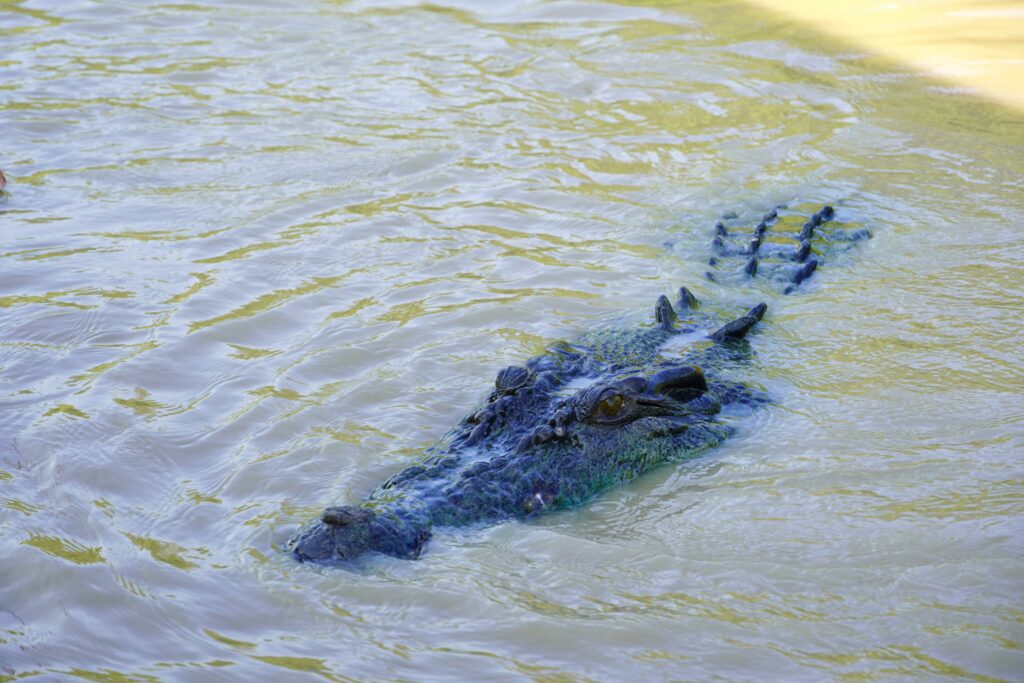
The adult is much darker in colour, with lighter tan or grey areas. The ventral surface is white or yellow in colour, and stripes are present on the lower sides of the body but do not extend to the belly. The saltwater crocodile has a heavy set jaw with between 64-68 teeth. Saltwater crocodiles have a valve at the bottom of the mouth that seals off from their throat, enabling them to open their mouths underwater.
Where does the Saltwater Crocodile Live?
Short Answer: The Top End!
There are estimated to be over 100,000 saltwater crocodiles in the NT at the moment however salties can be found in other parts of the world too. They can be found in Eastern India and Southeast Asia. As their famous name suggests, saltwater crocodiles are able to live in saltwater, but they are also found in freshwater rivers as well.
Saltwater crocodiles use thermoregulation to maintain body temperatures. They cool themselves in water and warm themselves in the sun.
The saltwater crocodile is a mostly aquatic animal that spends minimal time on dry land to warm in the sun. They are excellent swimmers and can be spotted hundreds of kilometres out at sea!
What does the Saltwater Crocodile Eat?
The Saltwater Crocodile is a patient and opportunistic predator. The size of the croc and its strength determine its prey as they feed on anything they can get their powerful jaws on. They use the power of their tail to be able to tackle big prey.
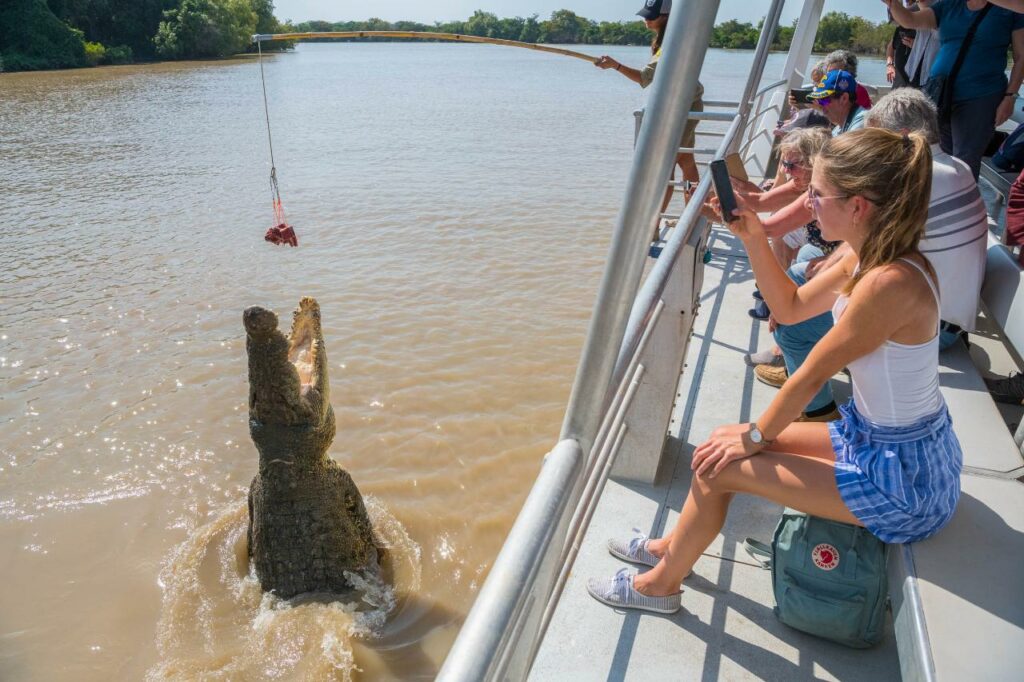
They can even feed on sharks! Their usual prey is mostly fish, turtles, goannas, snakes, birds, buffalo, wild boar and mud crabs. They like to grasp their prey and drag it back in, holding it under until the animal drowns. They also do their famous death roll which is when they roll rapidly in the water in order to remove the limbs of their prey. This is mostly because their teeth are meant for gripping and not ripping.
When do Saltwater Crocodiles Breed?
From the age of 10-12 years, the females start breeding and males start at 16 years. The females lay between 40-60 eggs and bury them in nests of vegetation and mud which are elevated to avoid loss from flooding during the rainy season. They protect their nests until the eggs hatch after 90 days and they carry their young to the water to ensure their survival. However, only 1% of the hatchlings are thought to survive to maturity in the wild.
Fun Saltie Facts:
- Large Salties have been known to hold their breath underwater for an hour!
- Their barks are a way of communicating with one another. Cool!
- They can sleep with one eye open!! – and scientists have now proved it to be true.
- They are unihemispheric sleepers. (This means they can shut down only one half of their brain at a time, keeping the other half alert to danger.)
Sunsets, epic adventures, mouthwatering food and a melting pot of cultures. This is what you can expect when you visit Darwin.
Follow Us
Get your daily fix of Northern Territory beauty by following us on Instagram

Join our Newsletter List
Be the first to get travel hints and local recommendations.
Darwin
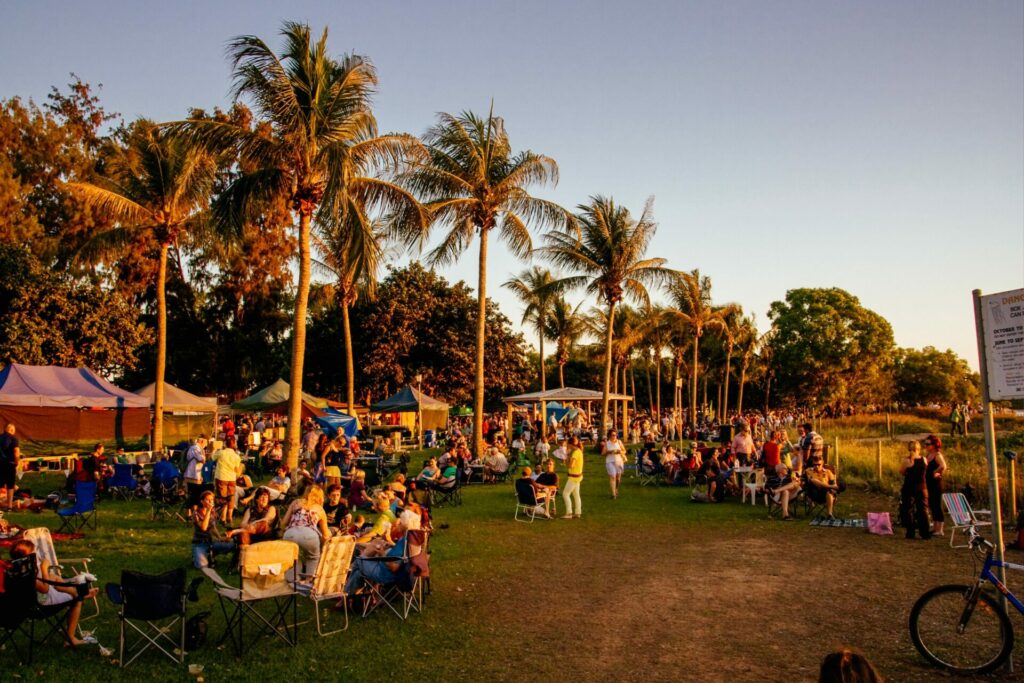
Darwin is the capital of the Top End and it is where all roads lead! The city is simply phenomenal. Whatever you need you will find it here and all year round too!
The Larrakia First Nations People are the Traditional Owners of the land. This is evident in the First Nation art that adorns the city’s galleries, museums and streetscapes. This multicultural city also has influences from other cultures, especially Asian cultures.
Being in the Top End, the city enjoys the tropical climate making it easier for you to enjoy all year round. Darwin’s wet season sees temperature and humidity increase. Darwin’s wet season typically arrives in late November to early December and brings with it heavy monsoonal downpours, spectacular lightning displays, and increased cyclone activity. During the dry season, the city has clear skies and mild sea breezes from the harbour.
Darwin is a nature lovers’ paradise! It is close to Kakadu National Park, Litchfield National Park and Katherine Gorge (Nitmiluk National Park). Come and explore the best kept secret in Australia.
Where to See Crocs in Darwin
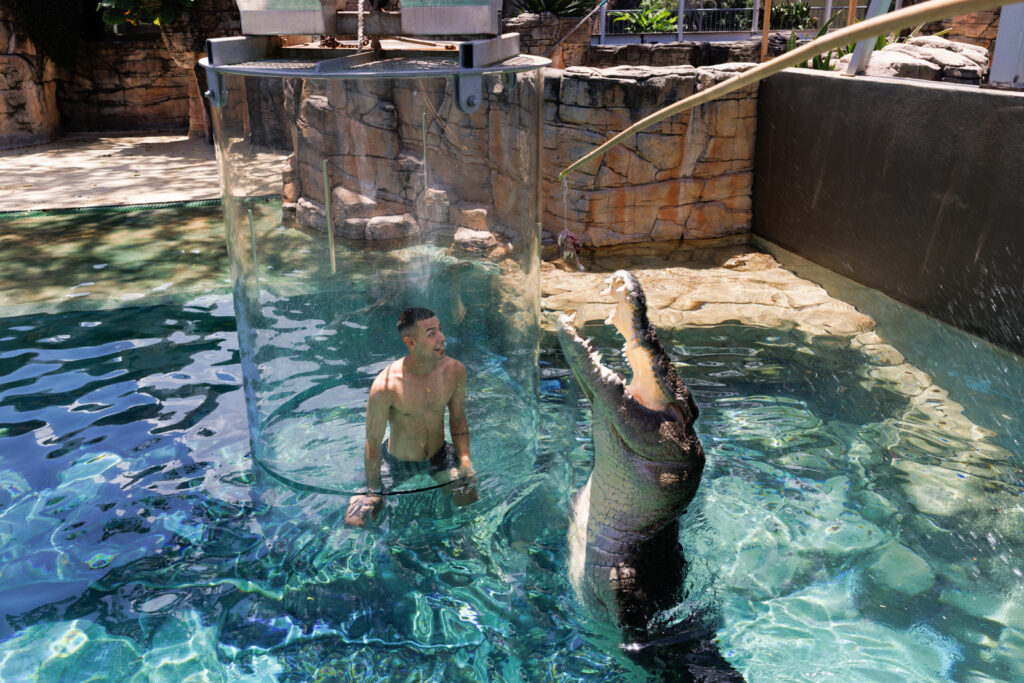
Darwin is the perfect base for all things saltwater crocs. Darwin itself is home to some exciting and interactive croc encounters like Crocosaurus Cove. Further away, Litchfield National Park and the Adelaide River are two of the most popular spots to see crocs in the wild.
- Crocosaurus Cove Entry
- Cage of Death – 2 people
- Croc N History Explorer
- Big Croc Feed VIP Experience
- Litchfield National Park and Croc Cruise from Darwin
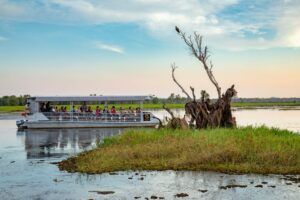
- Adelaide River Queen II Jumping Crocodile Cruise
- Spectacular Jumping Croc Cruise
- Flying Crocs
Our list of the best crocodile tours in Darwin gives you everything you need to know about planning your next adventure.
Darwin is filled with epic experiences that the whole family can enjoy. We hope you have an amazing time visiting Darwin.We would love your feedback on this page – please comment below if you’ve been to Darwin or seen a Saltie.
Norther® would like to invite you to explore more about the beauty of Darwin here. And… as always you can get more inspiration for other Destinations & National Parks & to visit by following @northerhq or get your Darwin daily fix @darwinweloveyou.
Norther would like to invite you to explore more about the beauty of Darwin here. And… as always, you can get more inspiration for other National Parks & Destinations to visit by following @northerhq or get your Darwin City daily fix by joining our FB group Darwin We 💙 Love You by Norther®
Heading to the NT? Here’s What You Need to Get Started
Travel Insurance
Whether you’re from Australia or across the globe, it’s a great idea to get insurance to cover unexpected accidents or medical emergencies. AllClear and Cover More are our favourite travel insurance providers to give us the peace of mind while heading to the outback.
Flights
For the best deals on flights, we recommend using Trip.com. It’s super easy to compare prices across different airlines and booking sites. I always find great options for my trips, and it saves me so much time and money!
Hotels
We always recommend using Booking.com for hotels. They have a variety of accommodation options and great filters to help you find the perfect place for your trip to the NT. With amazing deals, a great loyalty program, and the largest selection of hotels and rentals, it’s our favourite place to book rooms.
Tours
Tours, either multi-day, half-day, or private excursions, are a great way to experience the NT. Viator has a great selection of activities to help you travel the Territory and learn from locals.
Car Rental
If you're looking to rent a car to explore the Territory on your own, we suggest checking out Budget. It’s so easy to compare prices and find the best option from their huge selection of cars. Or try Rentalcars.com to see cars from all rental companies in the NT.
National Parks Pass
If you live outside the NT and plan on visiting national parks, you'll need a Parks pass. Choose from a day pass, a 2-week pass, 12-month pass, or family pass at NT.gov.au. If you're an NT resident be sure you bring your NT driver licence or proof of residency. Note: Park Passes are not accepted at Kakadu or Uluru-Kata Tjuta National Parks. Purchase those from Parks Australia.
Sim Card
If you're travelling and need a reliable connection, We'd recommend getting an eSIM from Airalo. Choose from data only or cellular connection. It’s super convenient and helps you stay connected without the hassle of swapping physical SIM cards or paying exorbitant fees to your wireless provider.