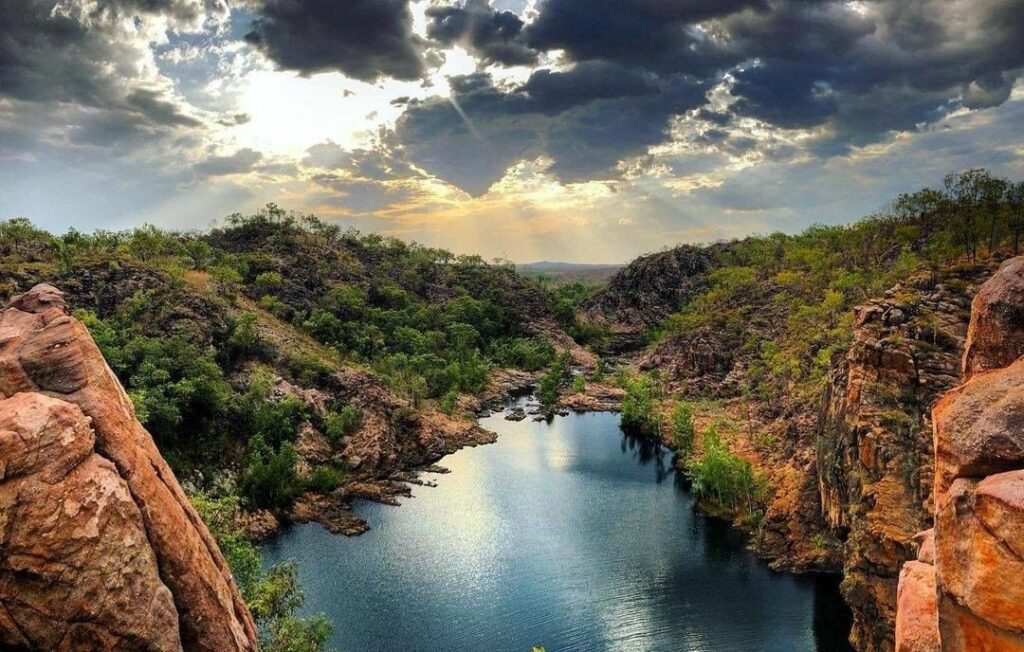

This Christmas season, we’re celebrating the Northern Territory with a series of stories that highlight its unique wildlife, landscapes, and the vibrant spirit of the Top End. Today, we’re heading to Elcho Island in Galiwin’ku to spotlight one of the region’s most iconic and instantly recognisable reptiles: the Frill Necked Lizard.
Famous for its dramatic frill and fascinating behaviour, this lizard is a master of display and survival in the tropical Top End. From sandy beaches to wooded areas, it’s a standout part of Elcho Island’s natural charm, making it a must-see for anyone spending the festive season in this remote corner of Australia.
Want to know all about planning your trip to Elcho Island? Scroll to the bottom of the post to see which site locals use to book hotels, where trusted travelers book tours, and how to find the best flight deals. Or Click Here to be taken there now.
Frilled Neck Lizard in Elcho Island Galiwin’ku
COMMON NAME: Frilled Neck Lizard
SCIENTIFIC NAME: Chlamydosaurus kingii
TYPE: Reptiles
DIET: Carnivore
SIZE: up to 85cm
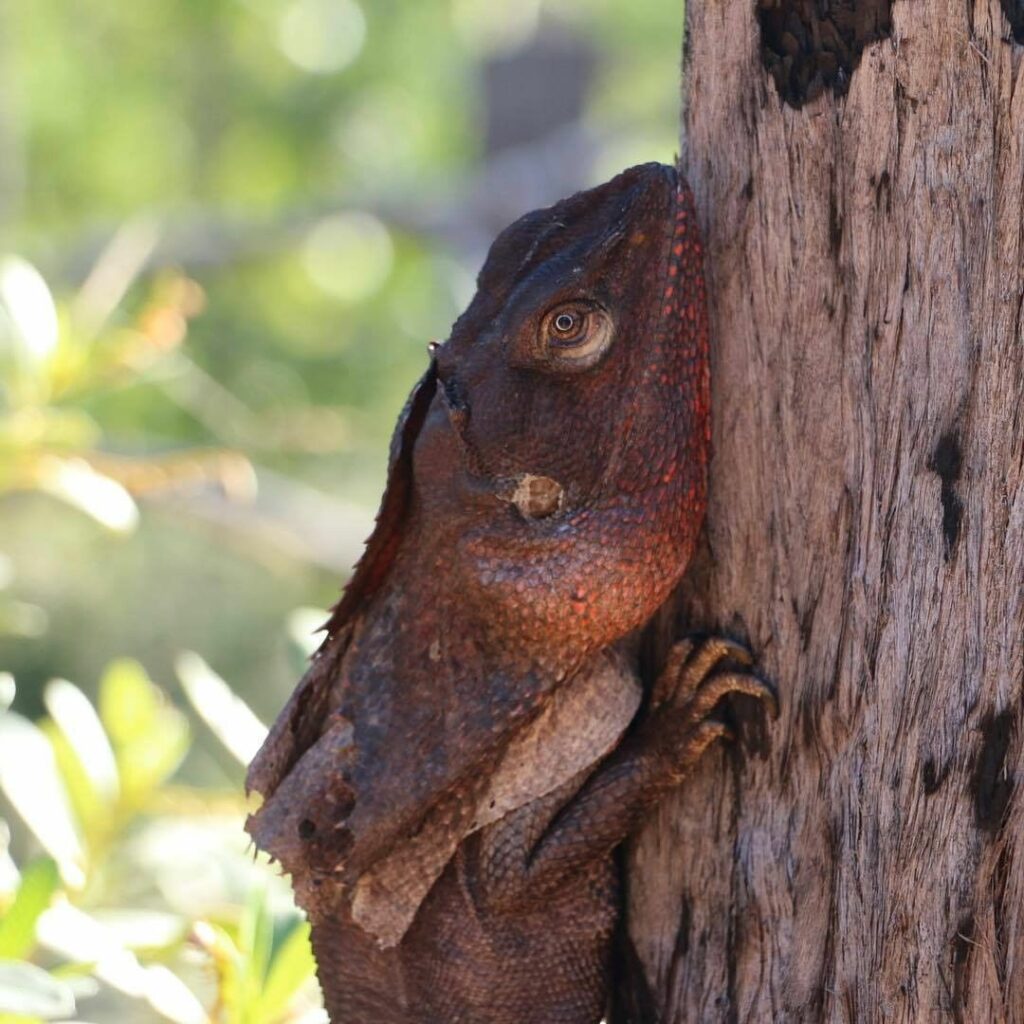
A Frill Necked Lizard or Frilled lizards, frillnecks, or“Frilly” has greyish-brown scales and is usually about 91 cm in length. Though it’s large in size, it weighs just over half a kilogram. This lizard has a long tail and claws made for hanging onto the trunk of a tree to climb it in a quick fashion. The brown-grey scales of this lizard help to camouflage it in the trees.
The males are larger than the females and these lizards reproduce at the start of the wet season. The females lay up to 23 eggs in a deep underground nest. When they hatch, the baby Frill Necked Lizards emerge fully independent and capable of hunting and utilizing their frill. Talk about being fully equipped!
These lizards have few natural predators. Large snakes, owls, and dingos are the most common predators. Foxes and birds of prey also pose a threat. Hatchlings and juveniles are most at risk from predation.
How does the Frill Necked Lizard Defend Itself?
The scales on the neck frill of this lizard help to prevent loss of moisture in their warm environment. However, they mostly use the frill as a defence mechanism. Frill Neck Lizards prefer to avoid any kind of fight. Thanks to their camouflage they nearly seem to blend with the ground or the branches. They keep their frills folded against their bodies and remain motionless in one spot.
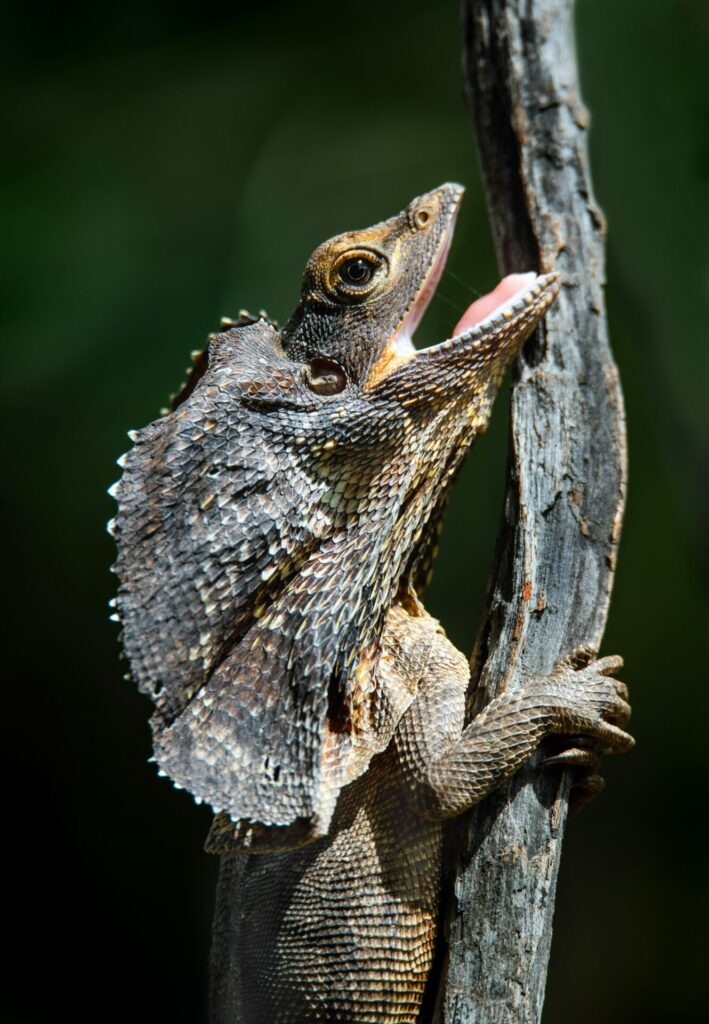
If they have been detected, they do their best to appear as mean as possible. They open their mouths and display their sharp teeth, spread out their bright frill, stand on their hind legs and beat the ground with their large tails. (dramatic little fella!) This makes the Frilled Neck Lizard appear almost double their size! It usually works out and frightens their opponent, making them run away.
If the opponent is not sufficiently frightened by all the dramatic action, the Frilled Neck Lizard turns around bolts. This run has it nicknamed as the bicycle lizard! The run is one of the funniest things to watch and looks like a cartoon ran off and left only dust behind! The lizard runs straight to the next tree to hide in.
What does the Frill Necked Lizard Eat?
They are not picky eaters and will eat anything in their way. They, like all of us, have preferences and like to eat insects, and spiders, but they also eat other lizards and small mammals. This reptile has been known to consume hundreds of thousands of termites in one sitting, then not eat again for months. Sounds like a tummy ache waiting to happen!
Follow Us
Get your daily fix of Northern Territory beauty by following us on Instagram

Join our Newsletter List
Be the first to get travel hints and local recommendations.
Where does the Frilled Neck Lizard Live?
Frilled Neck Lizards make their home across the tropical and warm temperate regions of northern Australia, thriving in environments where heat and humidity set the rhythm of life. They’re especially common in the savanna woodlands and gum-lined forests that stretch across the Top End—places rich with tree cover, insect life, and warm seasonal rains.
One of their notable strongholds is Elcho Island (Galiwin’ku) in Northeast Arnhem Land. Here, these iconic dragons weave through the island’s eucalypt woodlands and coastal scrub, spending most of their time off the ground. As arboreal creatures, they prefer the safety and vantage of tree trunks and branches, only descending to the forest floor when hunting for food or moving between trees.
Their range also extends beyond Australia, with populations found in the forests of southern New Guinea.
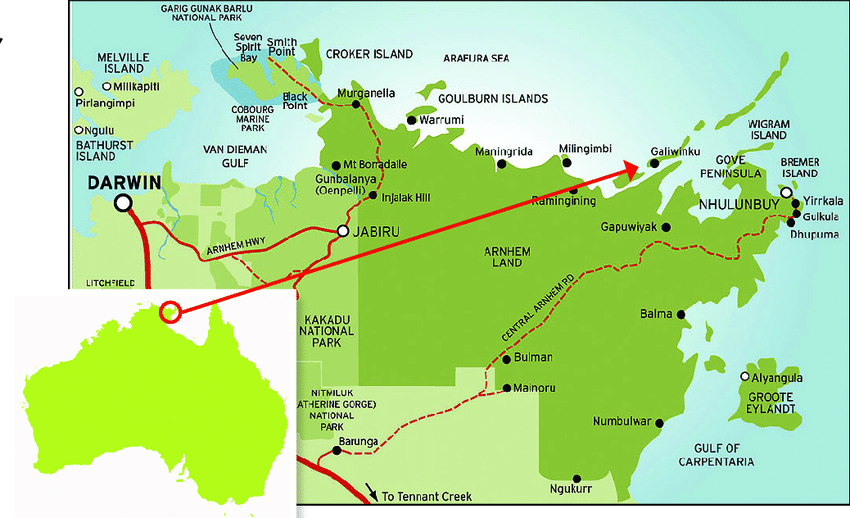
Elcho Island Galiwin’ku
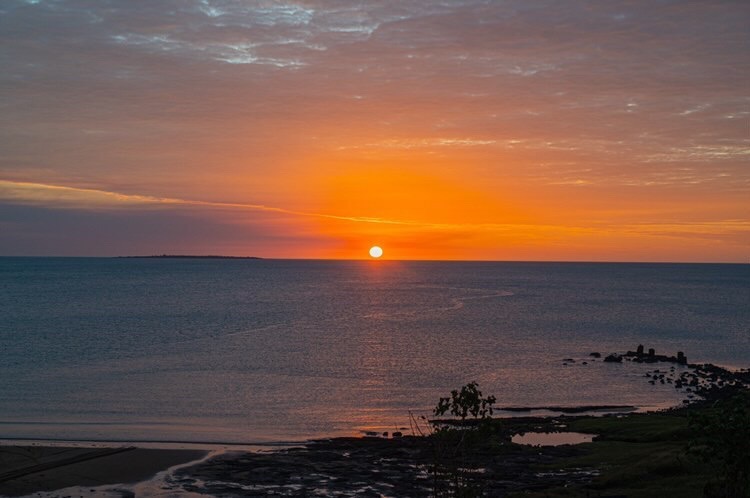
Elcho Island is a traditional Aboriginal (Yolngu) community situated approximately 550km northeast of Darwin in the Northern Territory. Known as Galiwin’ku by its traditional owners. This is the second largest and the most remote Aboriginal community in the Northern Territory.
Elcho is a tropical Island with varying terrain. On the eastern side, the Island is banked with mangroves and mud. This is the perfect hunting ground for a local favourite: mud crab and barramundi. The western side of the Island has sandy beaches and reefs. This is the ideal fishing ground for oysters, crayfish and even turtles. The rest of the Island is filled with tidal creeks and large ochre cliffs which are used for body paint for ceremonies as well as for making paint for art works.
How do you get to Elcho Island?
A permit is required from the Northern Land Council to visit this community. You can only visit by air on the community’s charter business, Marthakai Yolngu Airlines.
When on the Island, you can visit the Elcho Island Arts Center. This supports the local Yolngu artists who share their culture through art and are able to obtain income from their art. Be sure to contact the gallery before visiting as it may close due to fieldwork or cultural commitments.
Things to Do on Elcho Island
Elcho Island (Galiwin’ku) offers a rare chance to experience Yolŋu culture, remote coastal landscapes, and the rhythm of community life in one of Australia’s most unique island regions. Whether you’re visiting for a cultural exchange, nature-based adventure, or simply to soak in the tranquillity, there’s plenty to explore.
Things to do include:
- Join a Yolŋu cultural experience – Learn traditional art, song, dance, weaving, or storytelling with local cultural leaders.
- Visit art centres like Elcho Island Arts – Discover world-renowned works, meet artists, and see how Yolŋu art is produced.
- Explore pristine beaches and coastal bushland – Enjoy quiet walks, birdwatching, or simply take in the island’s untouched beauty.
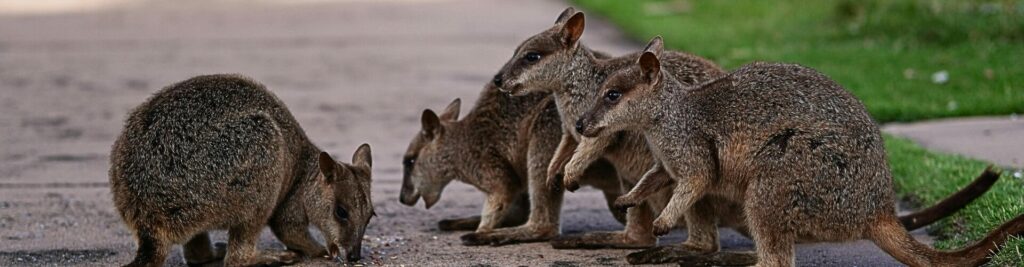
- Spot local wildlife – Keep an eye out for frilled-neck lizards, wallabies, and abundant birdlife.
- Attend community events and markets – Experience island life through music, food, and locally made crafts.
- Connect with local guides – Gain deeper insight into Yolŋu traditions, stories, kinship systems, and the island’s cultural significance.
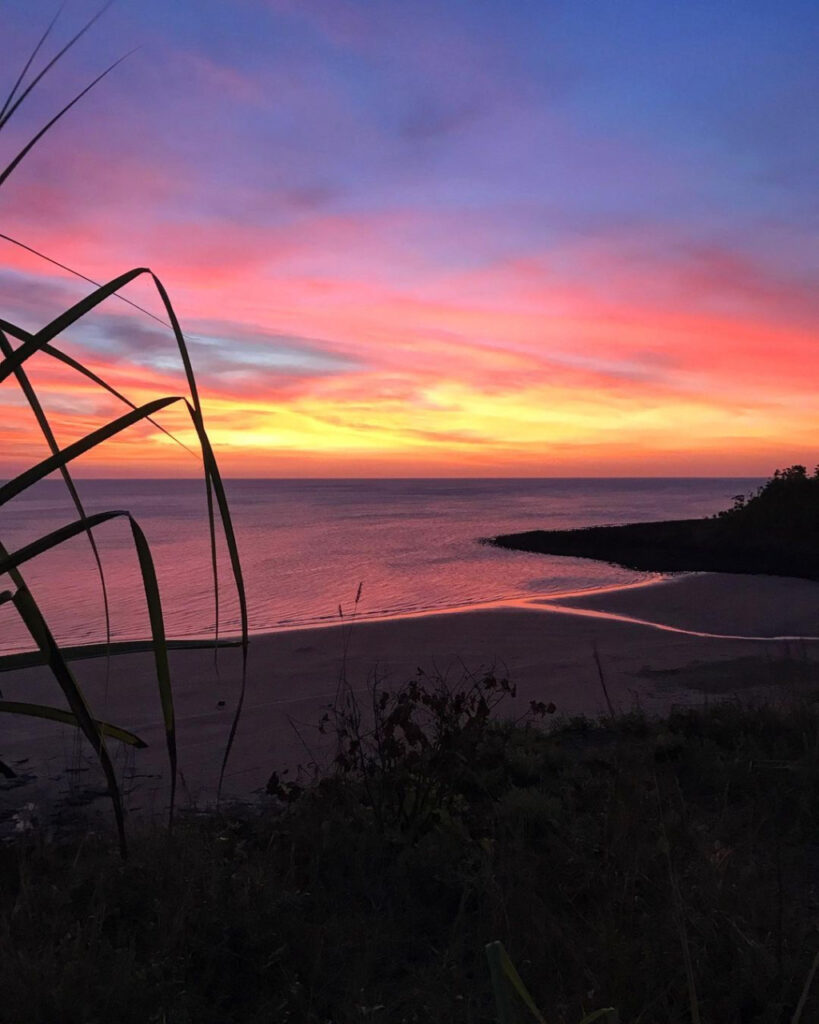
What an amazing moving experience Jude had on Galiwin’ku (Elcho Island). We would love your feedback on this page – please comment below if you’ve been to Galiwin’ku (Elcho Island) or know of any history.
Norther would like to invite you to explore more about the beauty of Galiwin’ku (Elcho Island) here. And… as always you can get more inspiration for other Destinations & National Parks to visit by following @northerhq or get your Galiwin’ku( Elcho Island) daily fix @elchoisland.
Heading to the NT? Here’s What You Need to Get Started
Travel Insurance
Whether you’re from Australia or across the globe, it’s a great idea to get insurance to cover unexpected accidents or medical emergencies. AllClear and Cover More are our favourite travel insurance providers to give us the peace of mind while heading to the outback.
Flights
For the best deals on flights, we recommend using Trip.com. It’s super easy to compare prices across different airlines and booking sites. I always find great options for my trips, and it saves me so much time and money!
Hotels
We always recommend using Booking.com for hotels. They have a variety of accommodation options and great filters to help you find the perfect place for your trip to the NT. With amazing deals, a great loyalty program, and the largest selection of hotels and rentals, it’s our favourite place to book rooms.
Tours
Tours, either multi-day, half-day, or private excursions, are a great way to experience the NT. Viator has a great selection of activities to help you travel the Territory and learn from locals.
Car Rental
If you're looking to rent a car to explore the Territory on your own, we suggest checking out Budget. It’s so easy to compare prices and find the best option from their huge selection of cars. Or try Rentalcars.com to see cars from all rental companies in the NT.
National Parks Pass
If you live outside the NT and plan on visiting national parks, you'll need a Parks pass. Choose from a day pass, a 2-week pass, 12-month pass, or family pass at NT.gov.au. If you're an NT resident be sure you bring your NT driver licence or proof of residency. Note: Park Passes are not accepted at Kakadu or Uluru-Kata Tjuta National Parks. Purchase those from Parks Australia.
Sim Card
If you're travelling and need a reliable connection, We'd recommend getting an eSIM from Airalo. Choose from data only or cellular connection. It’s super convenient and helps you stay connected without the hassle of swapping physical SIM cards or paying exorbitant fees to your wireless provider.