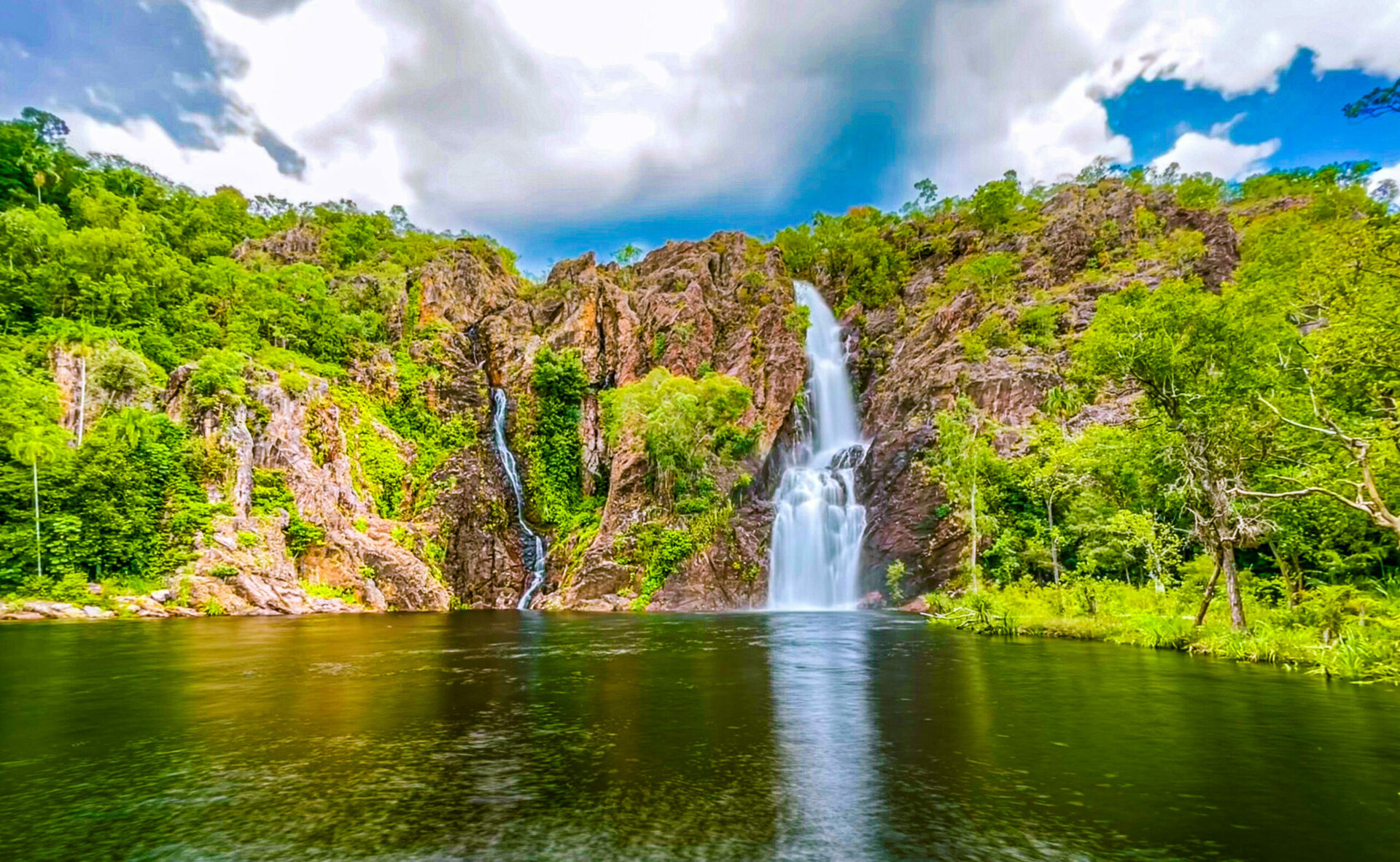

Located just an hour’s drive east of Darwin, Fogg Dam Conservation Reserve is a must-visit for nature lovers and birdwatching enthusiasts exploring the Top End. This remarkable area protects a vast seasonal floodplain, where sprawling wetlands, paperbark woodlands, and open water create one of the most accessible wildlife experiences in the Northern Territory. The sealed road across the dam wall makes it easy to explore, offering up-close views of wallabies, buffalo, and an incredible diversity of birdlife. With more than 230 recorded bird species, Fogg Dam is widely regarded as one of the best birdwatching destinations in the region.
This guide covers everything you need to know about visiting Fogg Dam, from how to get there and what to see, to the best time of year to experience the floodplain at its most vibrant. We’ll also share our top tips for driving the reserve road and include a curated list of the best local tours to help you make the most of your visit.
Want to know all about planning your trip to Fogg Dam? Scroll to the bottom of the post to see which site locals use to book hotels, where trusted travelers book tours, and how to find the best flight deals. Or Click Here to be taken there now.
How to Get To Fogg Dam
Fogg Dam Conservation Reserve is located around 70 km east of Darwin, making it an easy day trip in the Top End. From Darwin, drive south along the Stuart Highway toward Humpty Doo, then turn left onto the Arnhem Highway and continue for approximately 40 km. Clear signage will direct you to Fogg Dam Road, which leads into the reserve.
The reserve is fully accessible by 2WD vehicle for most of the year, with a sealed road across the dam wall and a loop road that takes you through the wetlands and woodlands. There are several designated parking areas, viewing platforms, and picnic spots throughout the reserve.
Public toilets are available near the main car park. If you’re exploring nearby attractions such as the Adelaide River or Berry Springs, Fogg Dam makes an easy addition to your itinerary.
Things to See and Do at Fogg Dam
At Fogg Dam Conservation Reserve, wildlife viewing is easy and accessible, with plenty to see from your car or on short walks. Here’s how to explore the reserve:
Drive the Floodplain
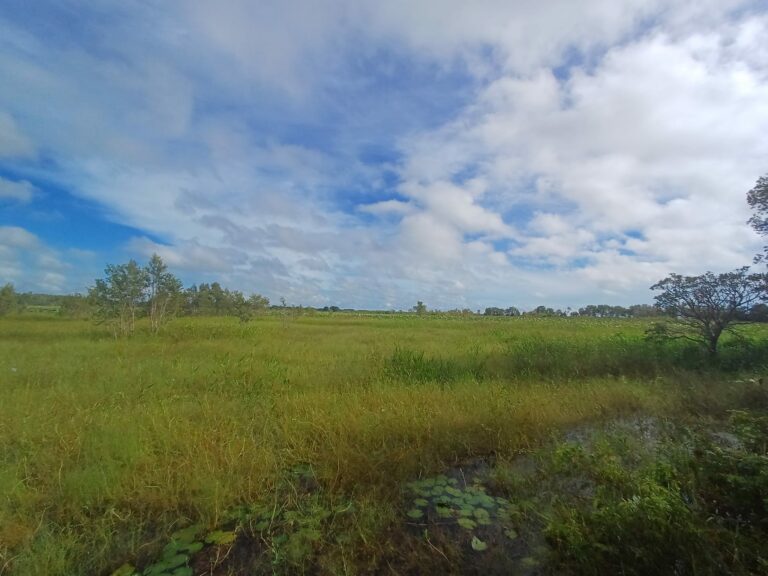
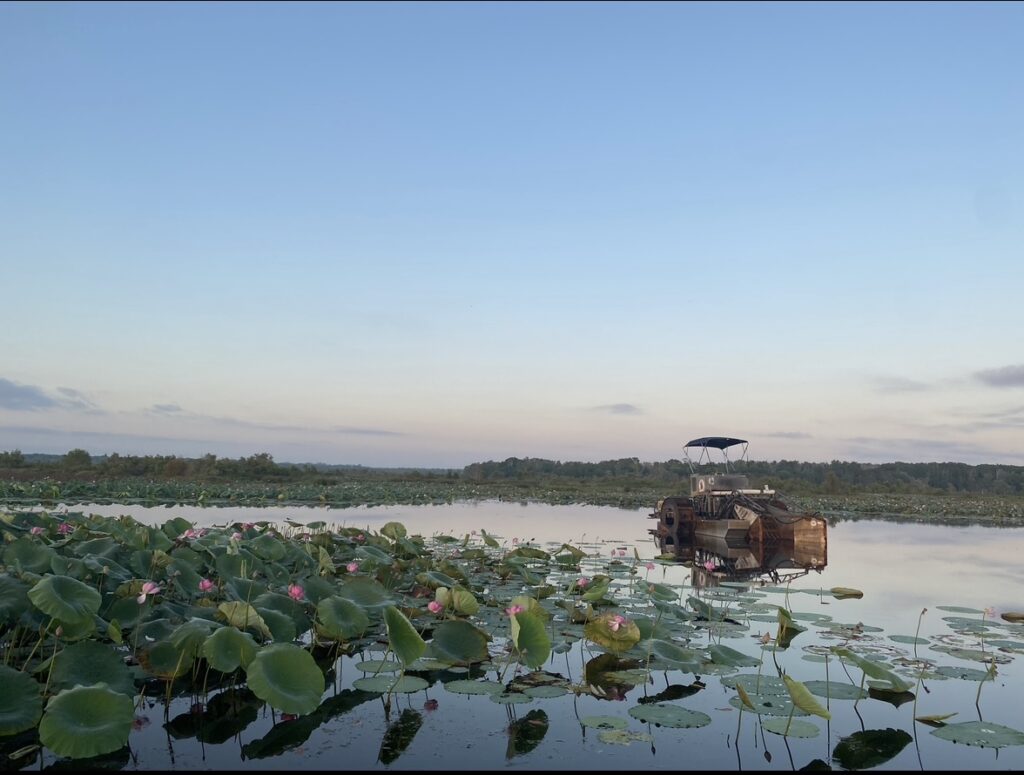
One of the best ways to explore the reserve is by driving Fogg Dam Road, a sealed route that runs directly across the floodplain. Suitable for 2WD vehicles in the dry season (though it may close after heavy rain), this road allows visitors to experience the wetlands up close without needing to venture far on foot. The dam wall is a standout section, offering panoramic views across open water and grassy wetlands.
Along the drive, you’ll often see:
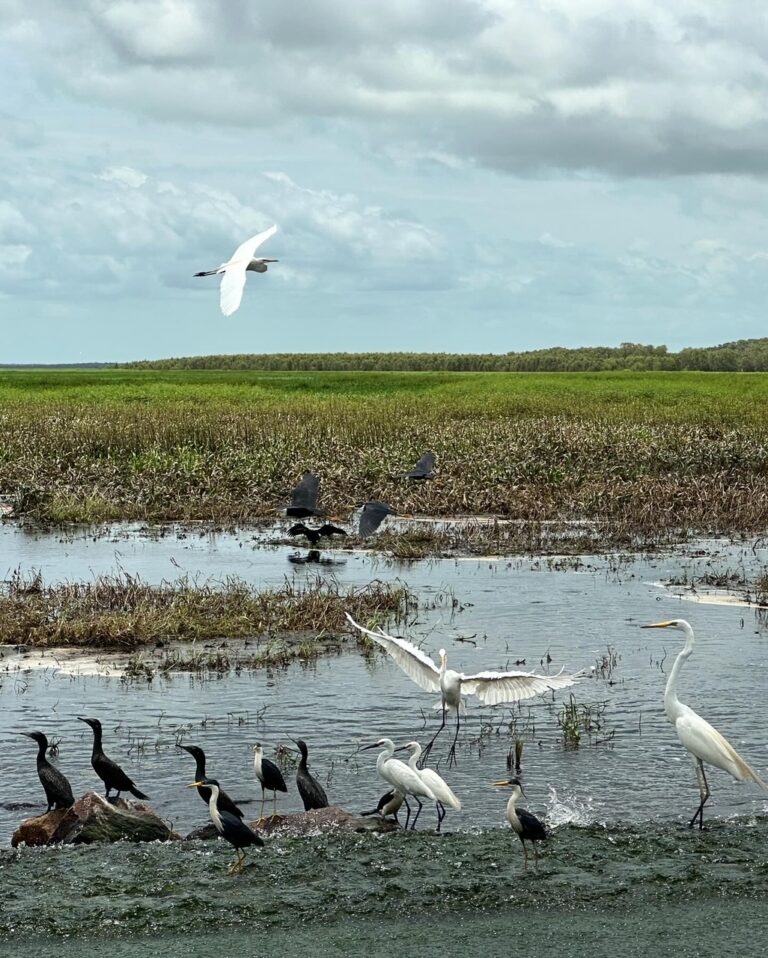
- Large numbers of magpie geese, herons, egrets and other waterbirds feeding in the shallows
- Birds of prey such as kites and sea eagles circling overhead
- Agile wallabies grazing near the roadside
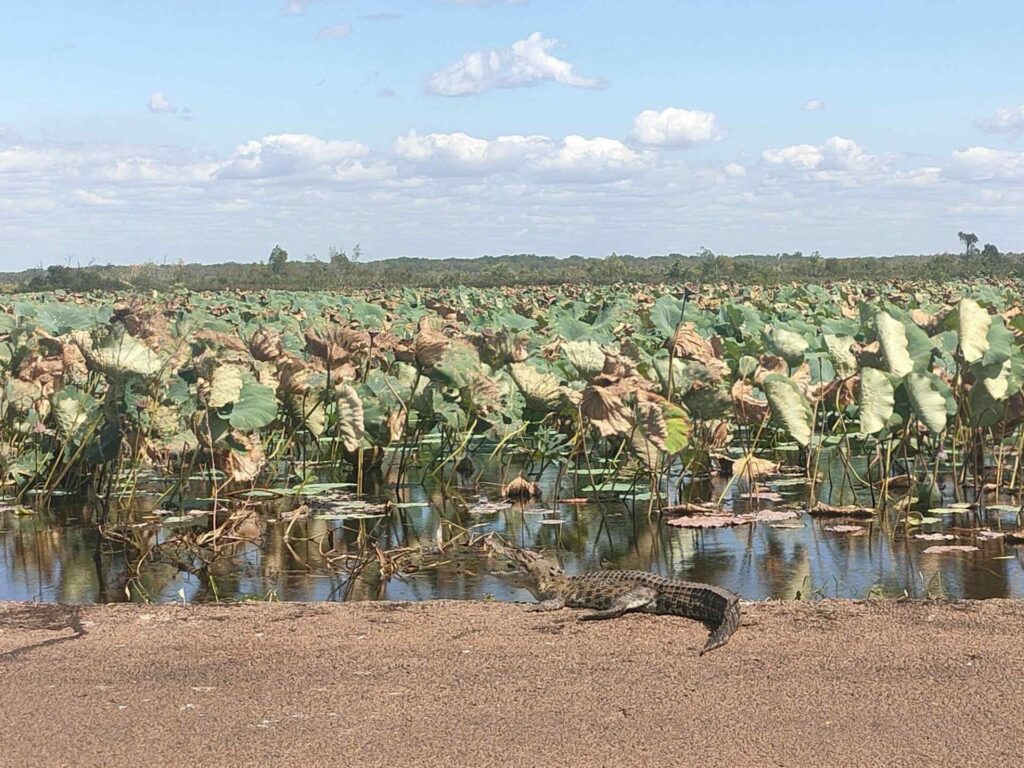
- Buffalo and occasional crocodiles in the wetlands
It’s one of the most scenic and wildlife-rich short drives in the Top End.
Bird Hides & Pandanus Lookout
For slower, quieter wildlife observation, take advantage of the reserve’s bird hides, which are positioned near key wetland areas. These shelters allow you to sit discreetly and watch birds feeding and nesting without disturbing them.
They’re especially rewarding during the dry season, when water recedes and birdlife concentrates in smaller areas.
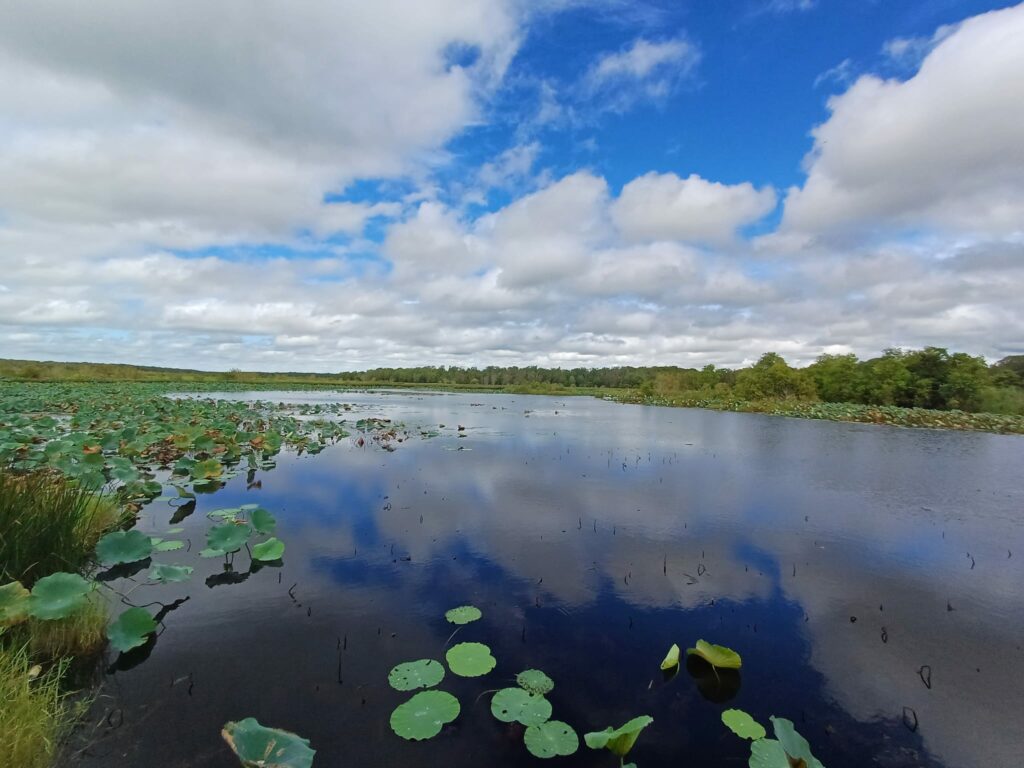
For a broader perspective, head to Pandanus Lookout, where you’ll gain elevated views back over the wetlands and surrounding woodland. From here, the scale of the floodplain becomes clear, particularly in the early morning light or late afternoon when wildlife activity peaks.
Photographers will appreciate the open vistas and reflections across the water, while casual visitors can simply enjoy the peaceful atmosphere and wide-open skies.
Walk Through Woodland, Paperbark & Wetlands
While much of Fogg Dam can be enjoyed by car, short walking tracks provide a closer look at the reserve’s diverse ecosystems.
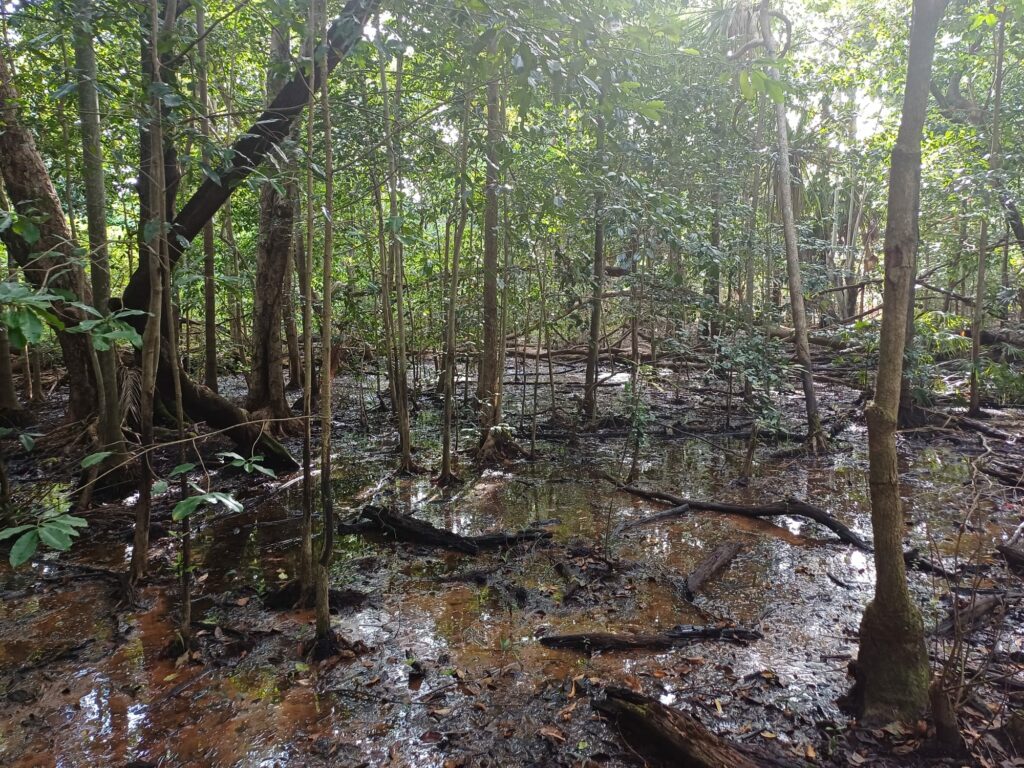
The popular Woodlands to Waterlily Walk takes you through open woodland before entering lush paperbark forest and wetland margins dotted with striking pandanus palms.
These changing habitats support a rich mix of bird and animal life. During the dry season, water lilies bloom across the wetlands, adding colour and texture to the landscape. Interpretive signage along the way helps explain how these different environments interact and why this field of wetlands and woodland is so ecologically important.
The walk is relatively easy and flat, making it suitable for most visitors while still offering a more immersive experience than the roadside stops.
Wildlife & the Reserve’s Unique History
Beyond the obvious birdlife, Fogg Dam supports a fascinating food chain. The reserve is known for its population of dusky rats, small native rodents that thrive in grassy wetland areas.
Their presence attracts raptors and other predators, making it one of the more dynamic wildlife environments in the region.
The landscape itself has an unusual origin story. Fogg Dam was built in the 1950s as part of a failed rice irrigation scheme, designed to create agricultural fields in the floodplain. While the project didn’t succeed, the dam wall retained water and unintentionally created permanent wetland habitat.
Today, the site is recognised for both its environmental importance and its cultural significance to local Aboriginal people. What began as an ambitious irrigation experiment has become one of the Top End’s most important wildlife refuges.
Follow Us
Get your daily fix of Northern Territory beauty by following us on Instagram

Join our Newsletter List
Be the first to get travel hints and local recommendations.
The Best Time to Visit Fogg Dam
The best time to visit Fogg Dam is during the dry season, from May to October. During these months, the weather in the Top End is cooler and far less humid, making it more comfortable to explore.
As water levels gradually recede across the floodplain, wildlife becomes concentrated in smaller areas, creating exceptional viewing opportunities. This is peak birdwatching season, when migratory species join the already abundant resident birds, often gathering in impressive numbers around the wetlands.
That said, Fogg Dam is accessible all year round (conditions permitting) and remains open throughout the year, although sections may temporarily close after heavy rain in the wet season.
Visiting during the wet season offers a completely different experience, with lush green landscapes, dramatic skies and water stretching across the floodplain. Wildlife can be more dispersed at this time, but the scenery is spectacular.
For the best experience at any time of year, plan your visit around sunrise and sunset. Early mornings and late afternoons bring cooler temperatures, softer light for photography, and more active wildlife — particularly birds and wallabies.
While the dry season is often considered the prime time to visit, Fogg Dam rewards visitors year round, with each season offering its own unique perspective on this remarkable wetland reserve.
Top-Rated Fogg Dam Tours
Want to explore Fogg Dam with a local guide? Local tours offer insights into the unique ecosystem and its inhabitants. Tours typically include guided walks, birdwatching sessions, and visits to key observation points.
Jumping Crocs + Wetlands – Half Day
📍Humpty Doo, Adelaide River, and Fogg Dam, NT
⏰ 6 hours
💰 From $127
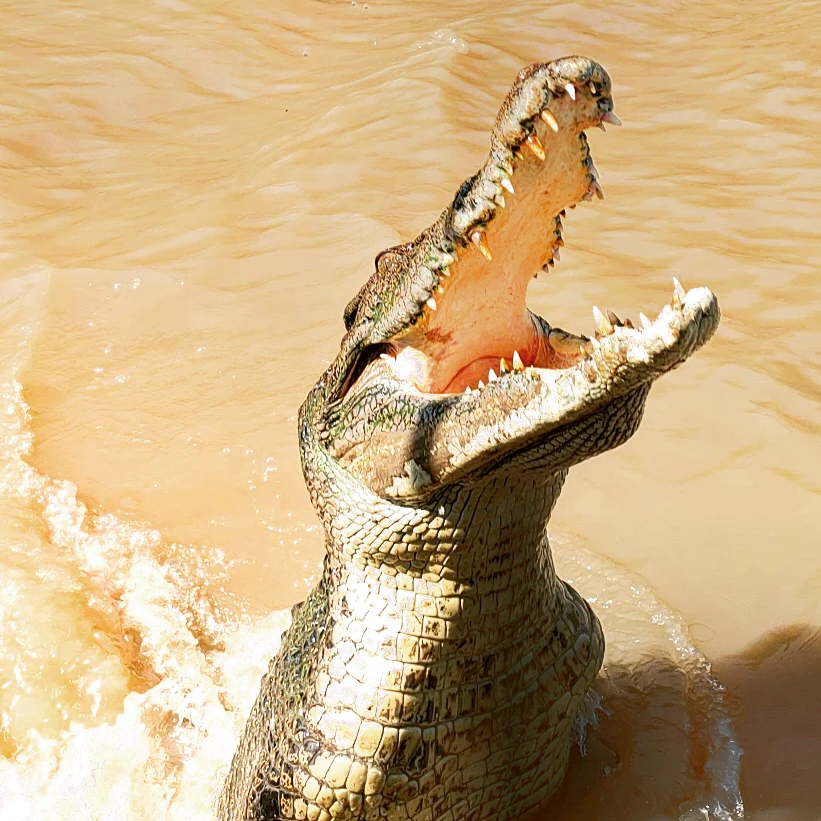
Experience the wild side of the Top End on a half-day adventure combining the wetlands of Fogg Dam with the iconic Adelaide River. Keep watch for native birds, buffalo and sweeping floodplain views as you travel through the Territory’s landscapes, then get up close to some of the region’s most impressive predators on a thrilling jumping crocodile cruise.
With convenient hotel pickup in Darwin, comfortable transport and an expert guide, this tour makes it easy to experience some of the Northern Territory’s incredible wildlife and scenery in just one morning or afternoon.

Litchfield National Park + Wetlands from Darwin
📍Litchfield National Park and Fogg Dam, NT
⏰ 10.5 hours (approx.)
💰 From $167
This tour offers a full-day adventure exploring the natural wonders of Litchfield National Park and Fogg Dam Conservation Reserve. Highlights include seeing Litchfield’s majestic waterfalls like Florence Falls and Wangi Falls, marvelling at ancient Magnetic Termite Mounds, and experiencing the diverse wetlands of Fogg Dam with its rare bird species.
It includes a guided nature walk, swimming opportunities in pristine rock pools, and informative commentary throughout your journey in an air-conditioned mini-coach.
Kakadu Wildlife and Wetlands from Darwin
📍Kakadu National Park and Fogg Dam, NT
⏰ 12 hours (approx.)
💰 From $266
This Kakadu and Fogg Dam Conservation Reserve tour features a visit to the World Heritage-listed Kakadu National Park, where you will explore Ubirr’s ancient Aboriginal rock art and spot saltwater crocodiles at Cahills Crossing.
Discover Aboriginal culture at the Bowali Visitor Centre and the diverse wildlife of Fogg Dam’s wetlands. Enjoy an optional Jumping Croc Cruise on the Adelaide River or explore the Fogg Dam Conservation Reserve. The package includes a Kakadu Park Pass, guided tours, and air-conditioned travel.

Fogg Dam Bird Tour
📍Fogg Dam, NT
⏰ 8 hours
💰 From $396
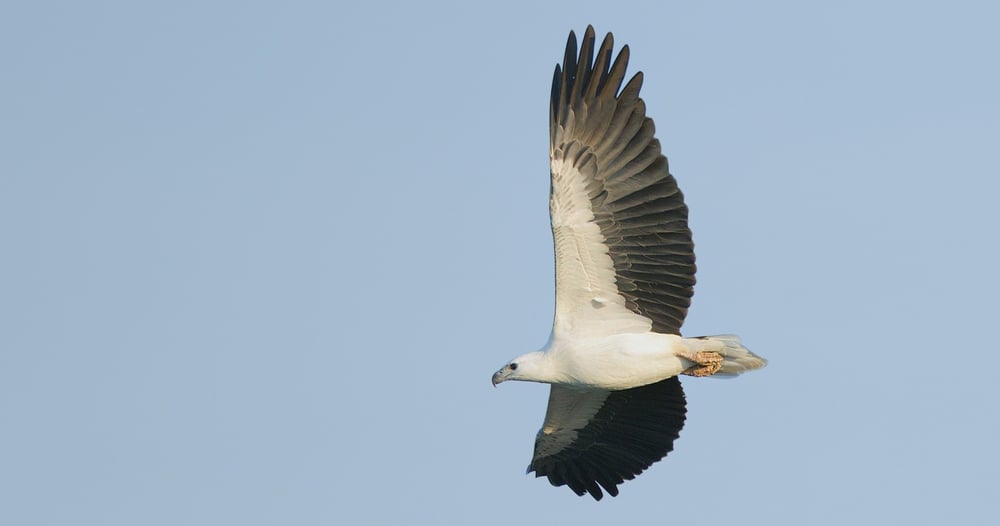
The Fogg Dam Bird Tour takes you from Darwin into one of the Top End’s best birdwatching locations. Originally developed as part of a 1950s rice project, the area is now a thriving floodplain ecosystem home to jabirus, brolgas, egrets, sea eagles and a wide variety of waterbirds, along with wallabies and crocodiles.
Led by knowledgeable local guides, this small-group experience offers expert insight into the region’s wildlife, habitats and history. It’s perfect for bird enthusiasts, photographers and anyone wanting to explore the natural beauty of the Northern Territory’s iconic wetlands.
Fogg Dam Conservation Reserve proves that some of the Top End’s most rewarding wildlife experiences are also the most accessible. The dam is located just east of Darwin, making it an easy addition to any itinerary, yet it feels worlds away once you’re out on the wetlands. Whether you’re scanning the skies for pied herons and other Australian birdlife, or quietly watching wallabies graze along the dam wall, the reserve offers an incredible variety of habitats and species in one compact area.
What makes Fogg Dam especially fascinating is its history. Built in 1956 as part of the failed Humpty Doo Rice Project, the original irrigation channel and dam infrastructure unintentionally created a thriving wetland ecosystem. Today, careful management has transformed the site into an important wildlife refuge, recognised not just locally but internationally for its birdlife.
With the right timing, a bit of patience, and some local knowledge, a visit to Fogg Dam becomes far more than a scenic stop — it’s a chance to experience one of the Northern Territory’s most successful conservation stories up close.
Have you visited Fogg Dam? Share your favourite moments and bird sightings in the comments below!
*Cover image by @giovannecidade
Get your daily fix of Northern Territory beauty courtesy of Norther® by following @northerhq. You can also check out more Northern Territory content by following Norther on Facebook. Please sign up here to join our newsletter list to be the first to get travel hints and local recommendations for National Parks and Destinations in the NT.
Heading to the NT? Here’s What You Need to Get Started
Travel Insurance
Whether you’re from Australia or across the globe, it’s a great idea to get insurance to cover unexpected accidents or medical emergencies. AllClear and Cover More are our favourite travel insurance providers to give us the peace of mind while heading to the outback.
Flights
For the best deals on flights, we recommend using Trip.com. It’s super easy to compare prices across different airlines and booking sites. I always find great options for my trips, and it saves me so much time and money!
Hotels
We always recommend using Booking.com for hotels. They have a variety of accommodation options and great filters to help you find the perfect place for your trip to the NT. With amazing deals, a great loyalty program, and the largest selection of hotels and rentals, it’s our favourite place to book rooms.
Tours
Tours, either multi-day, half-day, or private excursions, are a great way to experience the NT. Viator has a great selection of activities to help you travel the Territory and learn from locals.
Car Rental
If you're looking to rent a car to explore the Territory on your own, we suggest checking out Budget. It’s so easy to compare prices and find the best option from their huge selection of cars. Or try Rentalcars.com to see cars from all rental companies in the NT.
National Parks Pass
If you live outside the NT and plan on visiting national parks, you'll need a Parks pass. Choose from a day pass, a 2-week pass, 12-month pass, or family pass at NT.gov.au. If you're an NT resident be sure you bring your NT driver licence or proof of residency. Note: Park Passes are not accepted at Kakadu or Uluru-Kata Tjuta National Parks. Purchase those from Parks Australia.
Sim Card
If you're travelling and need a reliable connection, We'd recommend getting an eSIM from Airalo. Choose from data only or cellular connection. It’s super convenient and helps you stay connected without the hassle of swapping physical SIM cards or paying exorbitant fees to your wireless provider.