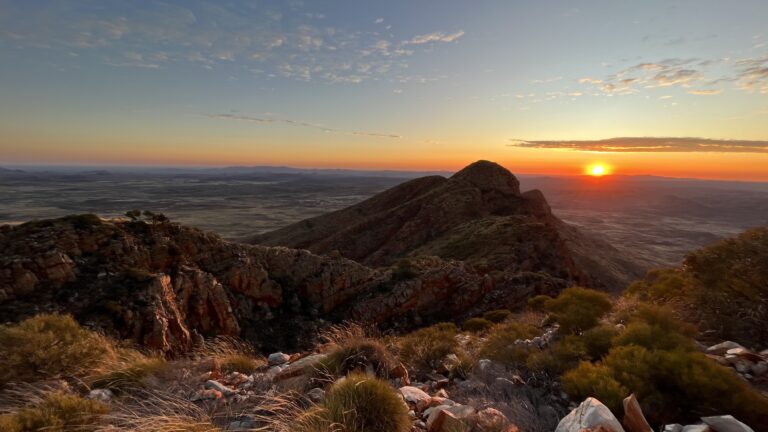

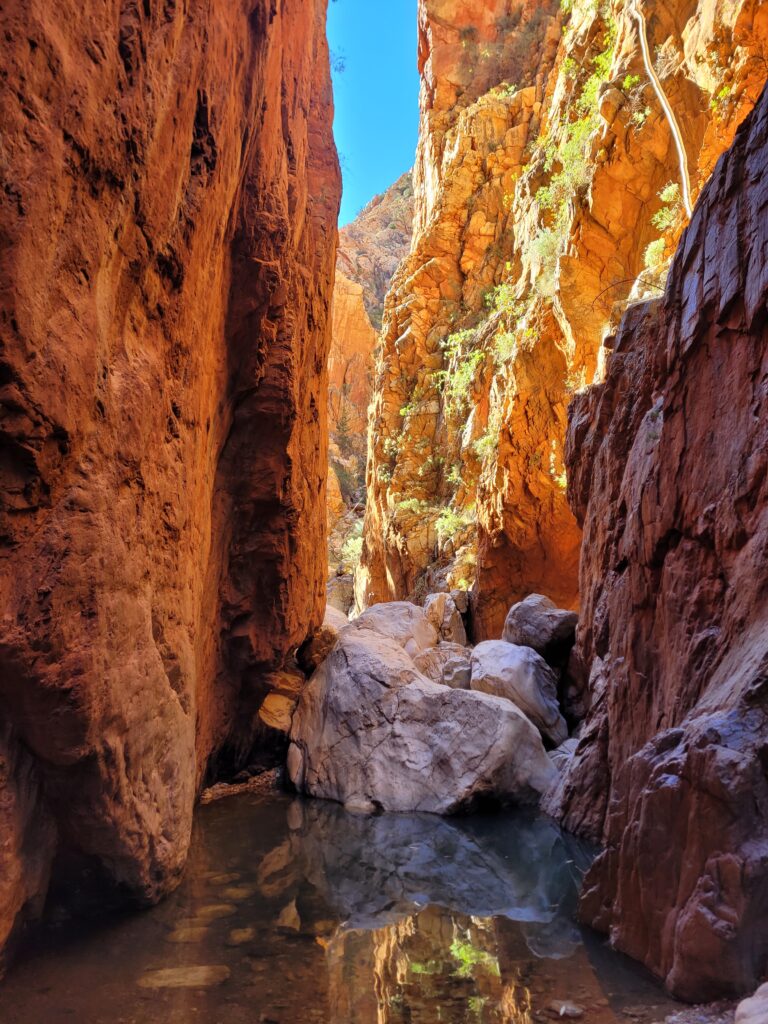
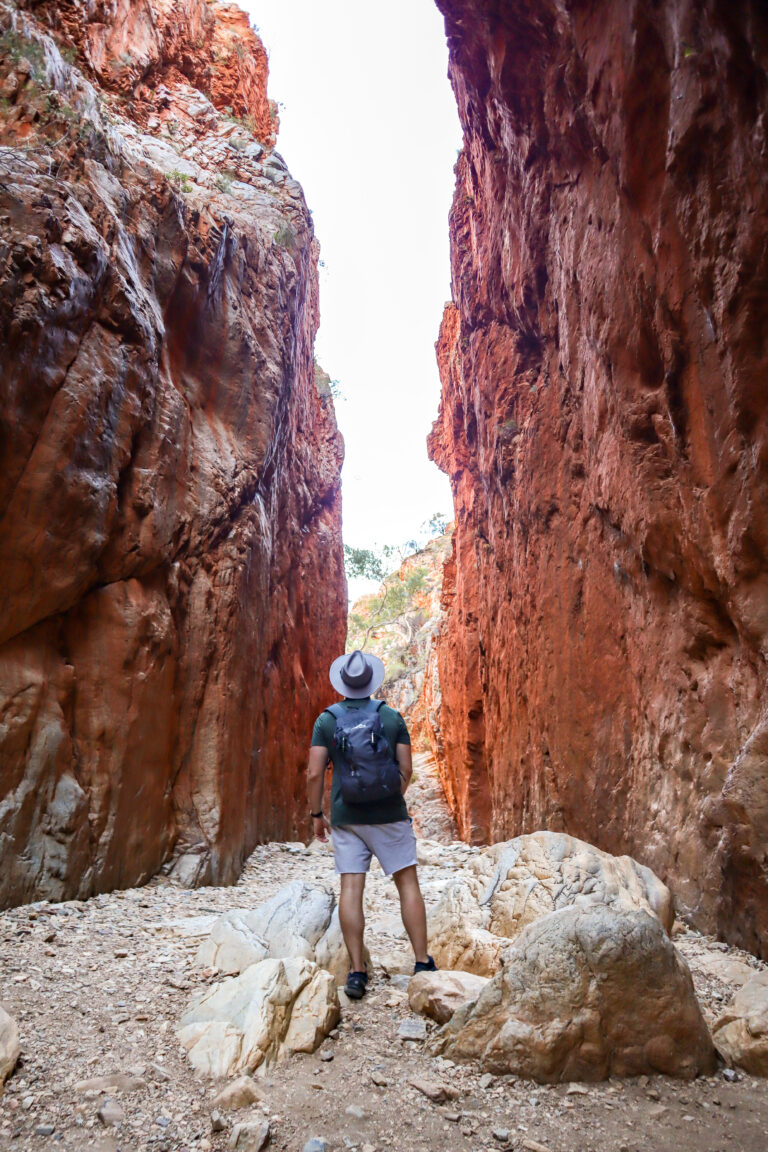
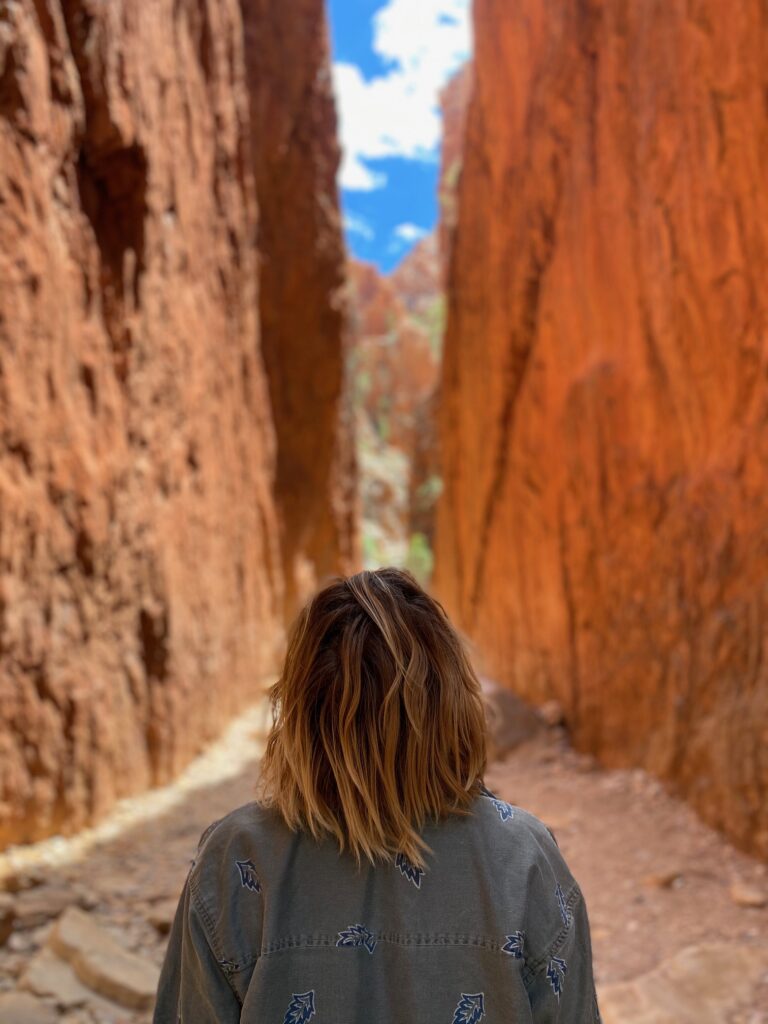
Just a short drive from Alice Springs, Standley Chasm showcases the rugged beauty of the West MacDonnell Ranges. Known as Angkerle Atwatye to the Western Arrernte people, this geological marvel stands 80 metres tall and spans just 3 metres wide, etched over millennia by nature. It’s a must-see in the Northern Territory with its striking red cliffs .
This guide has everything you need to know about visiting Standley Chasm. It highlights how to get there, the top things to see and do, and the best local tours.
Want to know all about planning your trip to Standley Chasm? Scroll to the bottom of the post to see which site locals use to book hotels, where trusted travelers book tours, and how to find the best flight deals. Or Click Here to be taken there now.
What is Standley Chasm?
Standley Chasm is a beautiful, red-rock geological formation located in the West MacDonnell Ranges. The formation is traditionally known as Angkerle Atwatye (Gap of Water) by the native Western Arrernte (pronounced ‘Ah-runda’).
The Western Arrernte people perceive Angkerle Atwatye as a sacred site. The region is actually an important cultural site for Arrernte women and is known as the site of women’s dreaming. The first European name for Standley Chasm was actually Gail Springs; however, it was changed to Standley Chasm after Ida Standley, the first schoolteacher in Alice Springs.
All Ages • 4.5 hours • Small Group Size, Personal TouchFrom AUD $137.09
Follow Us
Get your daily fix of Northern Territory beauty by following us on Instagram

Join our Newsletter List
Be the first to get travel hints and local recommendations.
Planning Your Visit to Standley Chasm
Where is Standley Chasm?
Standley Chasm is located in the West MacDonnell Ranges, right in the heart of Central Australia. It sits on a privately-owned and operated Aboriginal land reserve, surrounded by rugged red cliffs and desert landscapes. The chasm itself is about halfway along the Larapinta Trail, making it a popular stop for hikers as well as those exploring by car.
From Alice Springs: Standley Chasm is a 50km/40-minute drive west from Alice Springs. Take Larapinta Drive until you see the right turn to Standley Chasm.
From Darwin: Darwin is located 1,546km (16hr drive) away from Standley Chasm. Take National Highway 1 in Holtze from the A15 for 18.5km. Follow Stuart Highway for 1,477km. Finally, take Larapinta Drive/State Route 6 to Standley Chasm.
From Katherine: Katherine is 1,232km (12.5hr drive) away from Standley Chasm. Take Stuart Highway/National Highway 1 for 1,181km. Then, take Larapinta Drive/State Route 6 to Standley Chasm for 51km.
All Ages • 10 hours • Small Group Size, Personal TouchFrom AUD $242.55
Entry Fees & Facilities
Visiting Standley Chasm requires an entry fee, which goes directly towards supporting the local Western Arrernte community who own and manage the site. This contribution helps with the ongoing maintenance of the walking trails, facilities, and cultural programs, so visitors can enjoy the area in a sustainable and respectful way.
Once you arrive, you’ll find plenty of amenities to make your visit comfortable. There’s a café serving light meals, snacks, and refreshing drinks — perfect for cooling off after your walk into the gorge. A small gift shop is also on-site, where you can browse souvenirs and locally made art and crafts. For those planning a picnic, there are designated picnic areas shaded by native trees, as well as toilets and rest facilities nearby.
These facilities make Standley Chasm not only a spectacular natural attraction but also a convenient and welcoming stop for travellers exploring the West MacDonnell Ranges National Park.
Start from $1035 • All Ages • 4.5 Hours • Great for groups that want a personal touch!From AUD $1035
What to See and Do at Standley Chasm
There’s more to Standley Chasm than its dramatic rock walls. Whether you’re interested in learning about the culture of the local arrernte aboriginal people, exploring the natural surroundings, or simply soaking in the scenery, there are plenty of ways to experience this special place.
Cultural Tours: Join a guided tour led by local Arrernte guides to learn about the cultural significance of Angkerle Atwatye, the Arrernte name for Standley Chasm. These guided walks offer a deeper understanding of how the site has been used for thousands of years and why it remains important to the Traditional Owners today. See all First Nations Tours to learn more about the cultural importance of these locations.
Walking Trails: The main walking trail is a 2.4 km return track that’s well-maintained and accessible to most visitors. The walk is easy and self-guided. Along the way, you’ll pass native plants, towering rock formations, and end up right in the heart of the chasm itself. Interpretive signs along the trail share insights into the geology and ecology of the area, making it both scenic and educational. See this West Mac itinerary for more ideas.
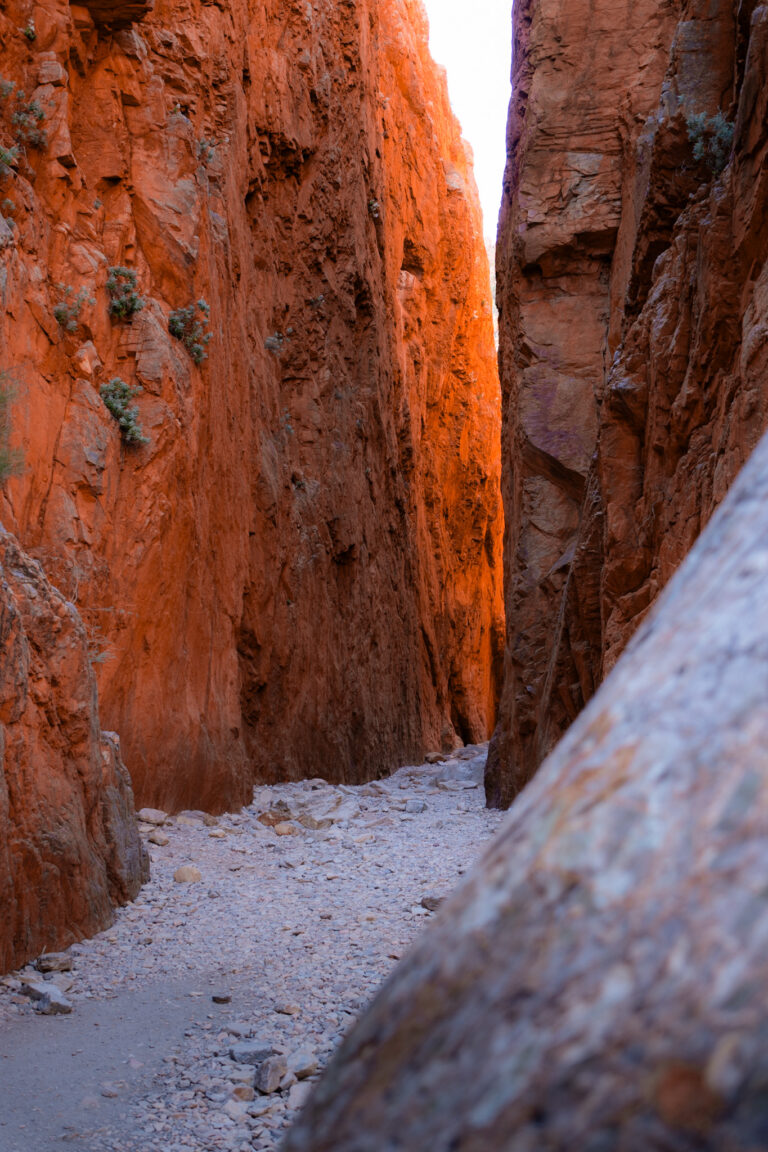
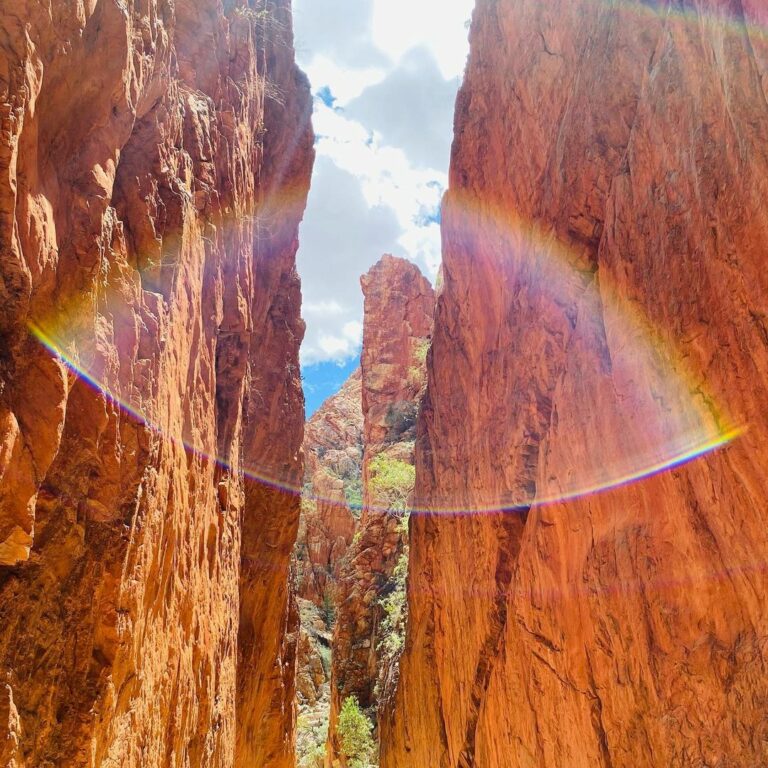
Photography Opportunities: Standley Chasm is a dream location for photographers. The midday sun is when the chasm really glows, with the sheer red rock walls lit up in vibrant shades of orange, red, and purple. Early mornings and late afternoons also provide softer light and fewer crowds for more atmospheric shots.
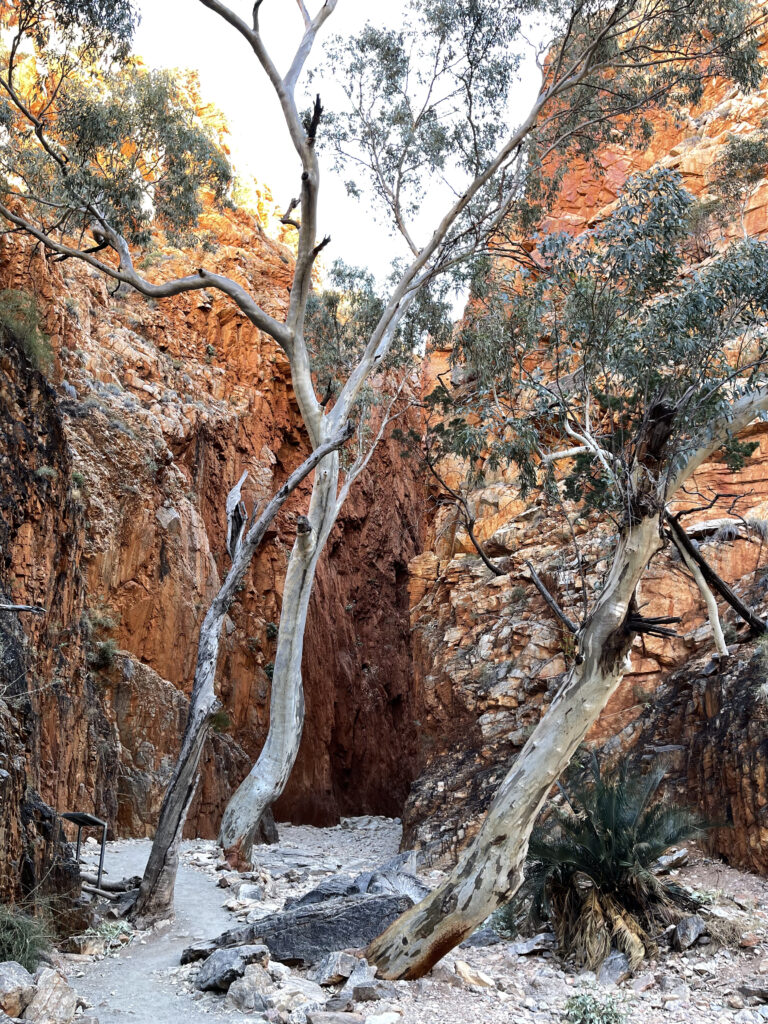
Wildlife Spotting: The surrounding bushland is home to a surprising variety of wildlife. The private flora and fauna reserve allows you to spot long-nosed water dragons basking on the rocks, colourful bird species like honeyeaters and fairy-wrens, and even black-footed rock wallabies if you’re lucky.
Camping and Facilities: While camping directly at the chasm is limited, there are nearby powered and unpowered campsites and facilities where visitors can stay overnight. This allows you to immerse yourself fully in the beauty of the West MacDonnell Ranges and enjoy the star-filled desert skies after the day visitors have left.
Best Time to Visit
Standley Chasm is beautiful year-round, but timing your visit well can make the experience even more special. Here’s what to keep in mind when planning your trip.
Time of Day
The most spectacular time to see Standley Chasm is around midday, when the sun sits high overhead. This is when the light cuts directly into the gorge and transforms the red quartzite walls into a glowing display of fiery oranges and deep reds. If photography is on your list, arrive just before noon so you’re ready to capture the colours at their brightest.
Seasonal Tips
Dry Season (May–October): With cooler temperatures, clear skies, and crisp desert air, this is the most comfortable time to explore. It’s perfect for walking, cultural tours, and taking your time outdoors. For more travel inspiration, check out our guide to the dry season.
Wet Season (November–April): Expect hot days, often above 40°C, so aim for an early morning or late afternoon visit. The reward is dramatic stormy skies, occasional rain showers, and a greener landscape that brings the desert to life. To plan your trip, see our guide to the wet season.
No matter when you go, Standley Chasm offers something unique—the key is planning your visit around the time of day and season that best suits your travel style.
Camping at Standley Chasm
Camping at Standley Chasm
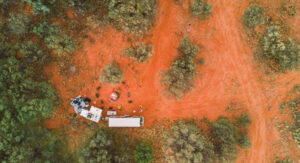
At Standley Chasm, there are unpowered and powered campsites.
Unpowered campsites begin at $22.50 AUD per night. Facilities at the unpowered campsites include toilets, hot showers, washing machine, kitchen, fridge, and barbecues. These types of sites are unmarked, and alcohol is not permitted/is prohibited due to Aboriginal cultural customs.
Powered campsites start at $28.50 AUD per adult or $65 per family. Facilities at powered campsites include toilets, hot showers, washing machine, kitchen, fridge, and barbecues. Book them at these links: unpowered campsites and powered campsites.
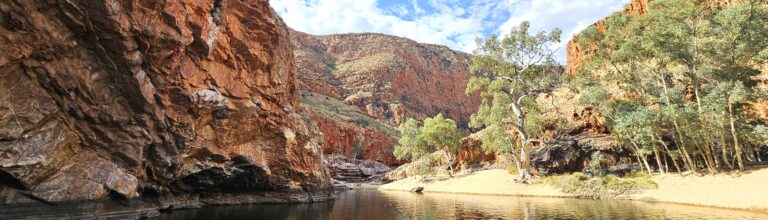
Campsites in West MacDonnell National Park: Ellery Creek Big Hole, Redbank Gorge, Serpentine Chalet Dam, Finke 2-Mile (4WD only), and Ormiston Gorge.
Start from AUD $1550 • All Ages • 10 Hours • Great for groups that want a personal touch!From AUD $1550
Top-Rated Standley Chasm Tours
West MacDonnell Ranges Tjoritja from Alice Springs
📍Alice Springs, NT
⏰ 12 hours
Explore the captivating West MacDonnell National Park, known traditionally as Tjoritja. Marvel at Standley Chasm (Angkerle Atwatye), a narrow, towering gorge, and cool off at Ellery Creek Big Hole, one of Central Australia’s premier swimming spots. Explore the UNESCO-listed Ochre Pit, used in traditional ceremonies, and the beautiful Ormiston Gorge (Kwartatuma). At Simpsons Gap (Rungutjirpa), try to spot the elusive black-footed rock wallaby. This tour is a must for outdoor lovers, covering 310 km with leisurely walks totaling 3-4 km.
Uluru Kings Canyon to West MacDonnell
📍Yulara, NT
⏰ 4 days
This 4-day adventure explores Australia’s Red Centre, stopping at iconic sites such as Uluru, Kings Canyon, Kata Tjuta, and the West MacDonnell Ranges. Begin at Uluru, where you’ll learn about its cultural and geological significance and see a stunning sunset. On Day 2, enjoy a sunrise at Uluru before hiking through Kata Tjuta’s Valley of the Winds, then head to Kings Canyon for a sunset and campfire dinner.
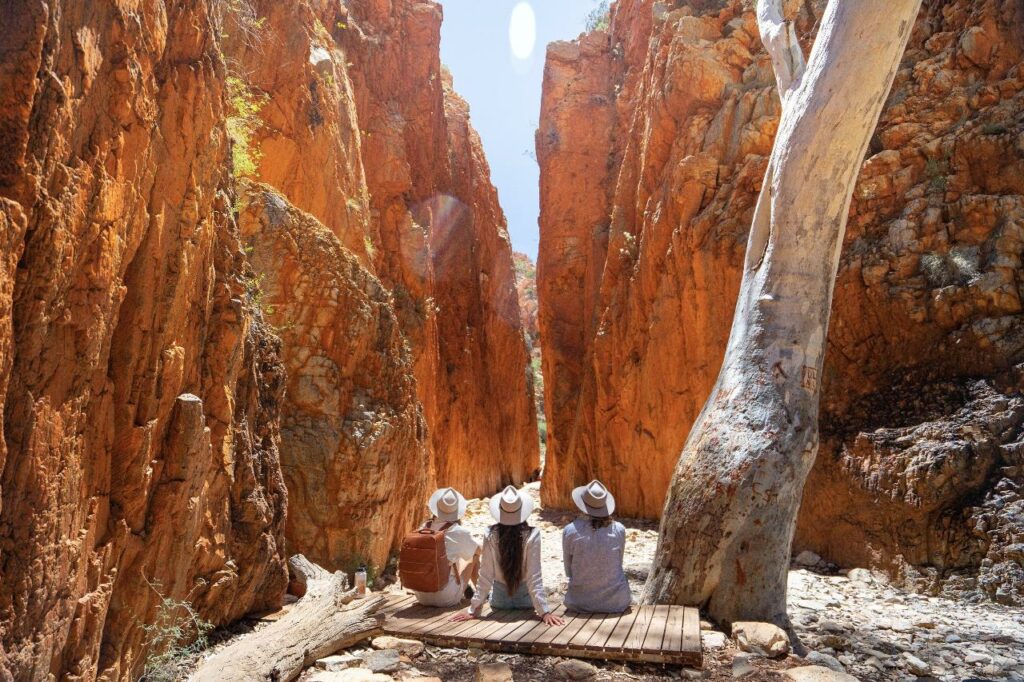
Day 3 offers a hike through the majestic Kings Canyon, followed by stargazing in the West MacDonnell Ranges. Conclude the journey with visits to Standley Chasm, Ellery Creek Bighole, Ormiston Gorge, and Simpsons Gap, before returning to Alice Springs.
Standley Chasm blends stunning natural landscapes with rich Aboriginal culture for a bucket list adventure.
Have you explored this hidden gem? Share your stories and reflections in the comments below—we’d love to hear about your experience!
Remember to pack your sense of adventure, respect for nature, and an open mind as you set out to discover the West MacDonnell Ranges. Leave only footprints behind as you traverse the trails and immerse yourself in the pristine wilderness of the National Park! We would love your feedback – we encourage you to share your experiences, questions, and suggestions in the comments below.
You can always get more inspiration for other National Parks to visit by following @northerhq or get your West MacDonnell National Park daily fix @westmacdonnellnationalpark on Instagram or at our Facebook page.
Heading to the NT? Here’s What You Need to Get Started
Travel Insurance
Whether you’re from Australia or across the globe, it’s a great idea to get insurance to cover unexpected accidents or medical emergencies. Cover More is our favourite travel insurance provider to give us the peace of mind while heading to the outback.
Flights
For the best deals on flights, we recommend using Trip.com. It’s super easy to compare prices across different airlines and booking sites. I always find great options for my trips, and it saves me so much time and money!
Hotels
We always recommend using Booking.com for hotels. They have a variety of accommodation options and great filters to help you find the perfect place for your trip to the NT. With amazing deals, a great loyalty program, and the largest selection of hotels and rentals, it’s our favourite place to book rooms.
Tours
Tours, either multi-day, half-day, or private excursions, are a great way to experience the NT. Viator has a great selection of activities to help you travel the Territory and learn from locals.
Car Rental
If you're looking to rent a car to explore the Territory on your own, we suggest checking out Budget. It’s so easy to compare prices and find the best option from their huge selection of cars. Or try Rentalcars.com to see cars from all rental companies in the NT.
National Parks Pass
If you live outside the NT and plan on visiting national parks, you'll need a Parks pass. Choose from a day pass, a 2-week pass, 12-month pass, or family pass at NT.gov.au. If you're an NT resident be sure you bring your NT driver licence or proof of residency. Note: Park Passes are not accepted at Kakadu or Uluru-Kata Tjuta National Parks. Purchase those from Parks Australia.
Sim Card
If you're travelling and need a reliable connection, We'd recommend getting an eSIM from Airalo. Choose from data only or cellular connection. It’s super convenient and helps you stay connected without the hassle of swapping physical SIM cards or paying exorbitant fees to your wireless provider.