
Northern Territory National Park Names offer more than just labels on a map—they reveal layers of history, culture, and connection to Country that stretch back thousands of years. In a region shaped by deep Indigenous heritage and more recent European exploration, the names of these parks help tell the story of the land and the people who have known it across generations.
Home to more than 20 national parks and reserves, the Northern Territory is filled with some of Australia’s most iconic landscapes—from rugged escarpments and ancient gorges to cascading waterfalls and vast wetlands. But beyond their natural beauty, these places carry names that reflect Aboriginal languages, cultural significance, early explorers, pastoral history, and defining natural features. Understanding these names adds a deeper dimension to any visit, turning a scenic stop into a meaningful experience.
In this guide, we take a closer look at how some of the Northern Territory’s most well-known national parks got their names, uncovering the stories behind them. Whether you’re planning a trip or simply curious, this is your starting point for exploring the rich history woven into these remarkable places.
Want to know all about planning your trip to the NT? Scroll to the bottom of the post to see which site locals use to book hotels, where trusted travelers book tours, and how to find the best flight deals. Or Click Here to be taken there now.
Elsey National Park: Thermal Pools
Elsey National Park has one of the most unique origin stories when it comes to its name! It is also closely linked to one of the greatest Australian Explorers of all time.
In 1856, leading a scientific exploration of the North of Australia, Augustus Charles Gregory passed through the Elsey region. On this expedition, Gregory was accompanied by other explorers and scientists, namely, Joseph Ravenscroft Elsey.
On the expedition, Sir Gregory named places they came across along the way. He decided to name the creeks flowing into the Roper after Elsey. This was an honour to Elsey, and fortunately, this is the name from which the national park was named.
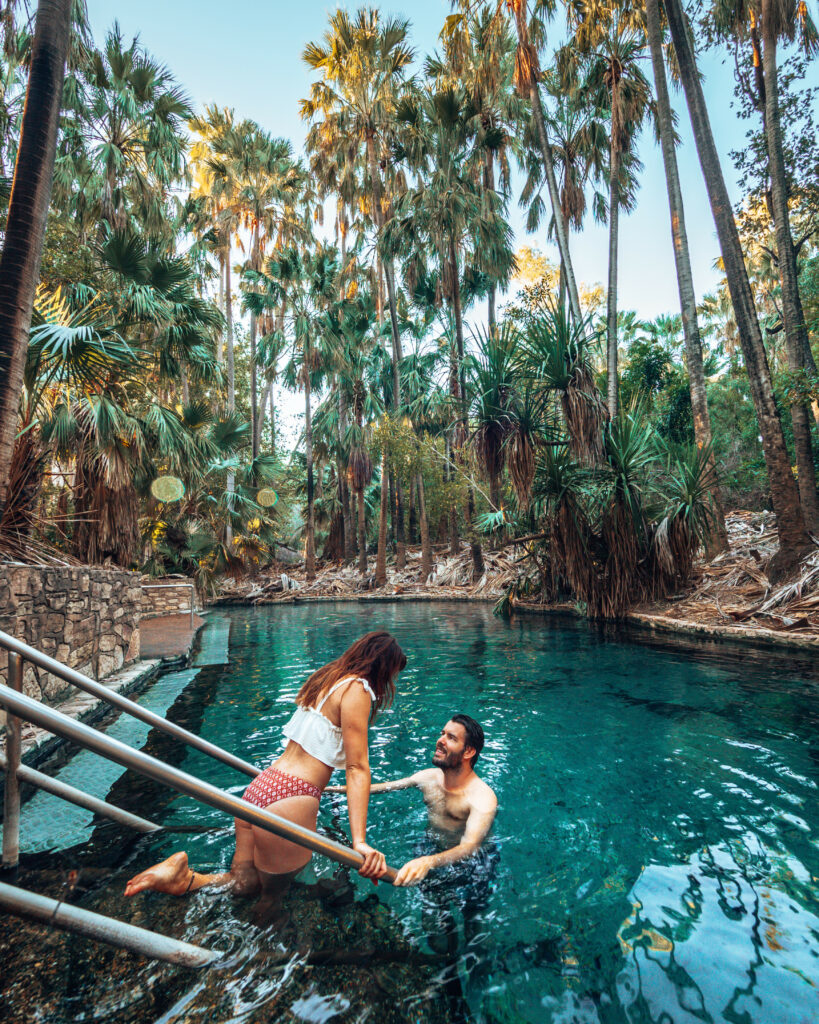
The park’s popular attractions were a big draw to the army, which had settled on the area in 1942. The Thermal Pool became popular with troops stationed in the area and by 1946 a soldier was granted a sub-lease over the Mataranka homestead area and developed it as a tourist facility. They started the journey of establishing the park.
Today, Elsey National Park is one of the most visited Northern Territory National Parks because of its amazing thermal pools, fauna and flora.
Want to learn more? Discover everything you need to know about visiting Elsey NP.
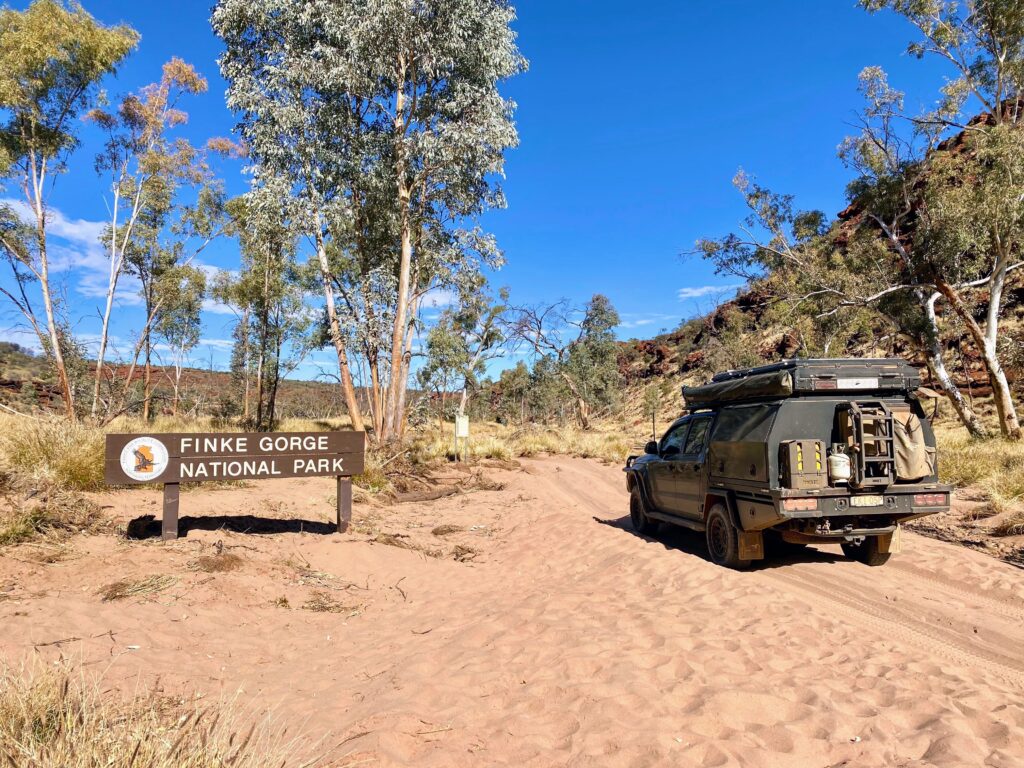
Finke Gorge National Park: Sacred Cultural Sites
Wondering how Finke Gorge National Park got its striking name? This park was uniquely named after the Finke River. The river is believed to date back 350 million years!
Believed to be one of the oldest rivers in the world, this river was named by John McDouall Stuart during one of his attempts to cross the Australian continent from south to north. He named the river after William, Finke, Esq.
Finke Gorge National Park is a cultural landmark as it is part of the traditional homelands of the Arrernte First Nations people. It is also home to multiple sacred sites and Dreamings. All of which are crucial to the Arrernte people.
Turn this story into a real adventure—explore our full guide to visiting Finke Gorge.
Follow Us
Get your daily fix of Northern Territory beauty by following us on Instagram

Join our Newsletter List
Be the first to get travel hints and local recommendations.
Judbarra/Gregory National Park: Landscape & Culture
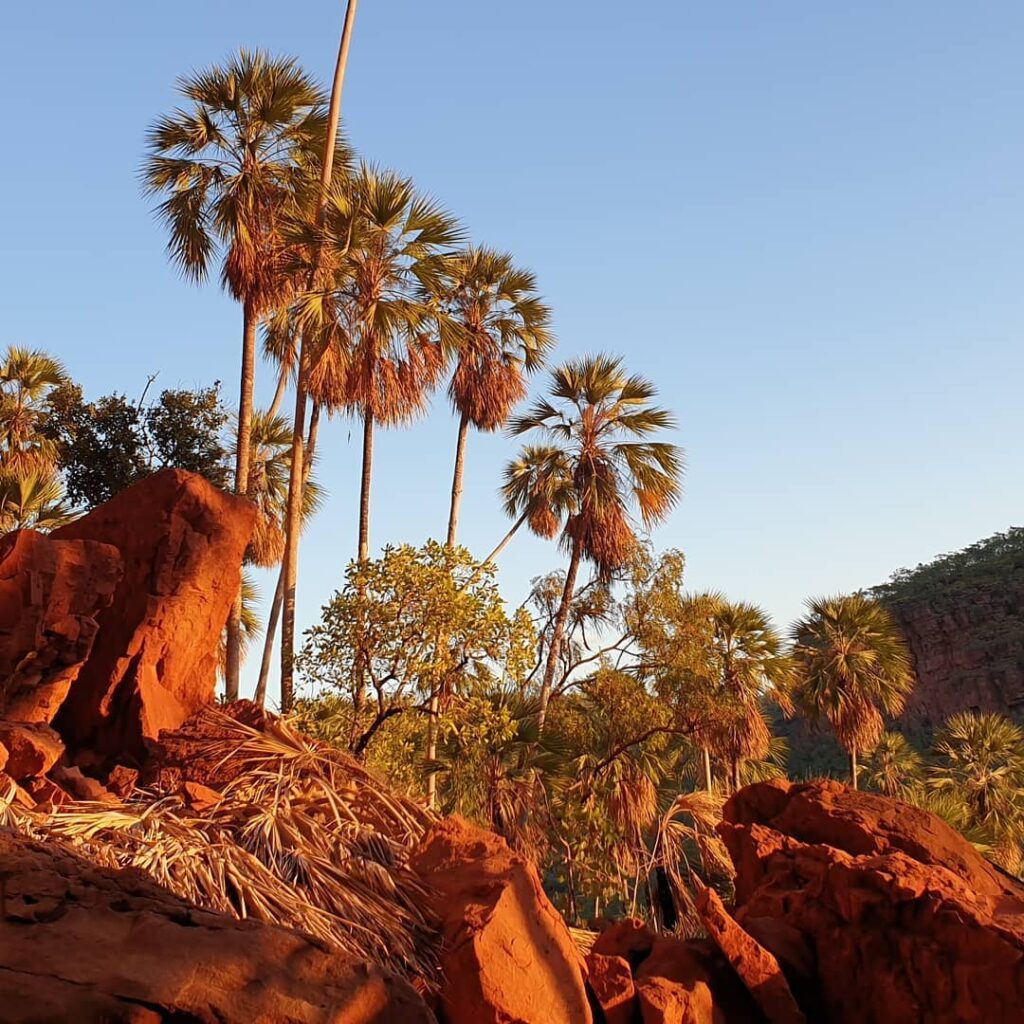
You may be wondering why Judbarra/Gregory National Park was given its name. Believe it or not, it has two different names, Judbarra and Gregory! Judbarra is a rich and complex living cultural landscape. The Park has exceptional historical heritage, it encompasses the traditional homelands of several Indigenous groups who have lived on the land for thousands of years. It has notable cultural value to the First Nations people and Australians too.
Judbarra
The first part of the name is ‘Judbarra’, a term originating from the local First Nations people which means ‘two rivers’. This refers to the two main rivers that flow through the park, the Victoria and Roper Rivers.
Gregory
The second part of the park’s name commemorates Augustus Charles Gregory, who explored this area in 1855. He was a surveyor and explorer who made significant contributions to Australian geography, including mapping much of Northern Australia. This is why his name will remain a reminder of his important work in this area for many decades to come.
Take a deeper dive into this iconic destination and plan your adventure.
Kakadu National Park: Indigenous Land
Kakadu National Park takes its name from the Gagudju people, an Aboriginal group whose traditional lands lie within the park. Early European settlers and explorers recorded the name “Kakadu” as a variation of “Gagudju,” reflecting the way the language was heard and interpreted at the time. While the spelling has evolved, the name remains closely tied to the original custodians of the land.
The Gagudju people were one of several Aboriginal groups who have lived in this region for tens of thousands of years, each with their own languages, stories, and deep spiritual connections to Country. Over time, the Gagudju language itself has become less widely spoken, but the name lives on through the park, serving as a reminder of the area’s enduring cultural heritage.
Today, Kakadu National Park is jointly managed by its traditional owners and the Australian government, and its name reflects a broader recognition of Aboriginal history and identity. It’s more than just a label on a map—it’s a link to the people, culture, and stories that have shaped this extraordinary part of Northern Australia for thousands of years.
Explore Kakadu in more detail and start planning your visit with our list of the top things to do.
Keep River National Park: Must for Bird Watchers
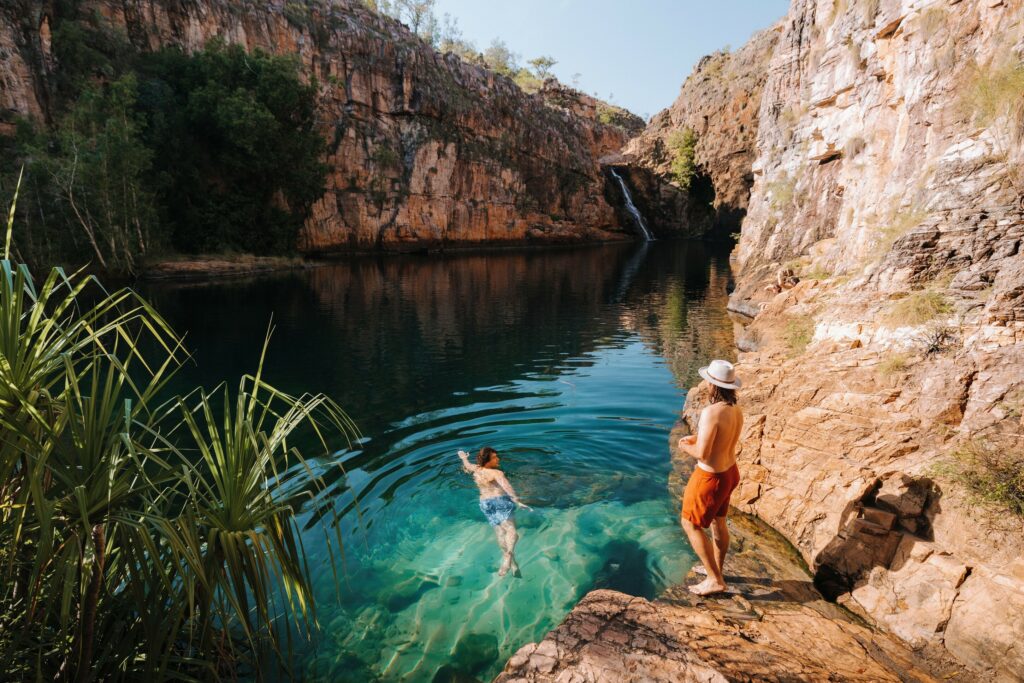
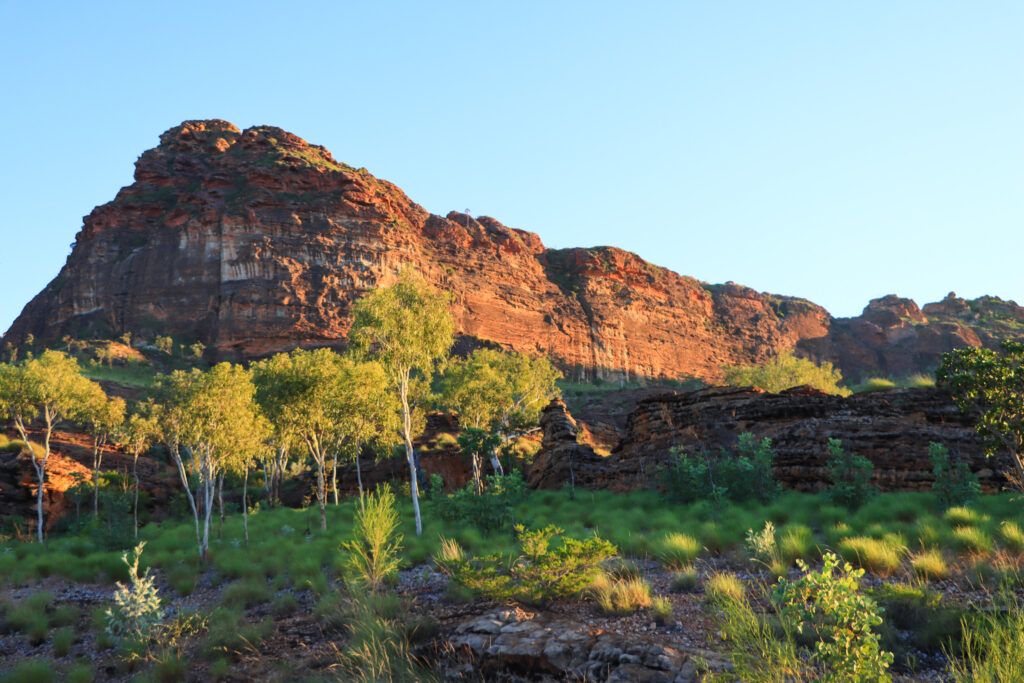
You might be wondering why the Keep River National Park was named that way. Well, the answer has a lot to do with the First Nations people. The park is located at the border of Northern and Western Australia, and it’s believed that the name “Keep River” comes from the local language of the Miriuwung and Gajirrabeng people.
The Miriuwung and Gajirrabeng people have spoken about their country by referring to the various features of the landscape; these are known as “songlines” or “dreaming tracks”. The name for Keep River is derived from a word in their language meaning “to flow”, which describes both how the river runs through their country, and also how life cycles repeatedly.
Keep River National Park is a rewarding destination for bird watching, with over 150 recorded species found across its sandstone ranges, wetlands, and savannah woodlands. The park’s diverse habitats attract everything from finches and honeyeaters to birds of prey, making it a great spot for both casual observers and keen birders.
Ready to experience it for yourself? Learn more about visiting the incredible Keep River.
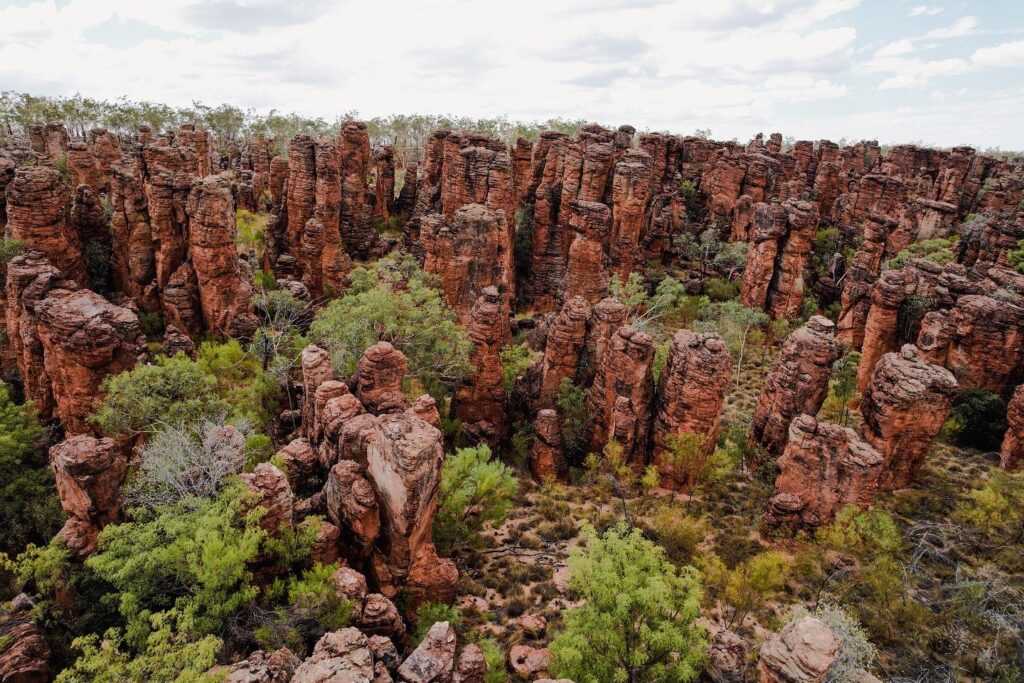
Limmen National Park: Unique Beeswax Rock Art
Limmen National Park takes its name from the nearby Limmen Bight River and the Gulf of Carpentaria coastline it flows into. The name “Limmen” is believed to have been recorded by early European explorers and surveyors mapping the remote northern coastline, though its exact linguistic origins are less clearly defined than some other parks in the Northern Territory.
While the name itself reflects this period of exploration, the area is rich in Aboriginal cultural heritage, with numerous sacred sites and striking rock art spread across the landscape. Today, Limmen National Park stands as both a vast and remote conservation reserve and a place of long-standing cultural significance, where the stories of its traditional owners continue to shape its identity.
Discover the most iconic thing to do in Limmen and start planning your trip.
Litchfield National Park: Known for Waterfalls
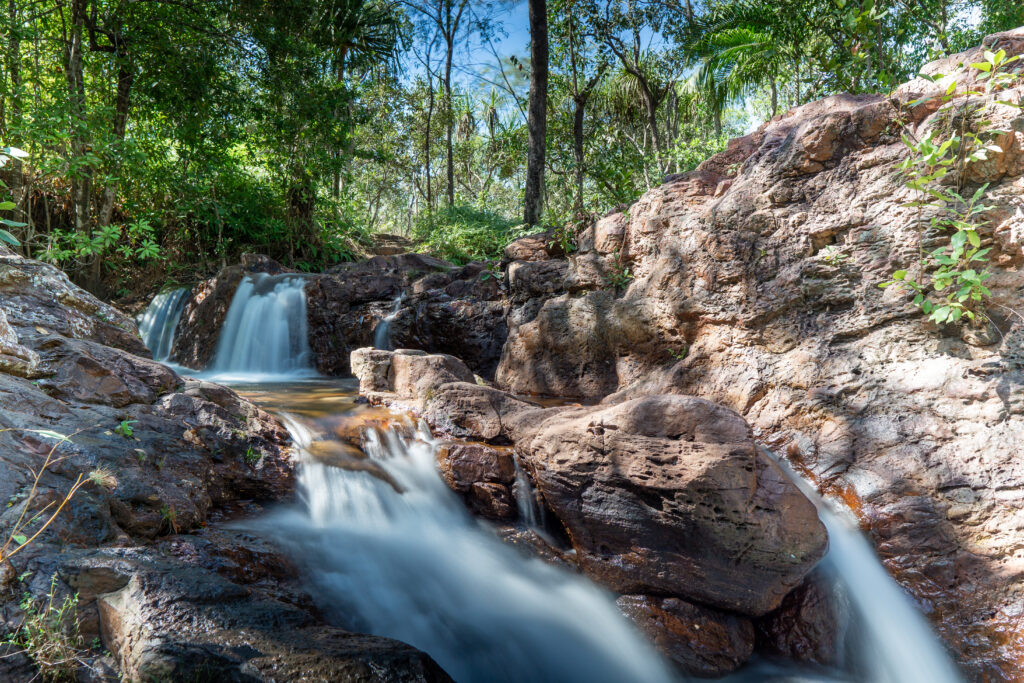
Frederick Henry Litchfield was a member of the Finnis expedition from 1865, sent to find areas ideal for settlement. He was a surveyor and explorer greatly responsible for the mapping of the Northern Territory, for which Litchfield National Park is named after him.
In the 1980s, the Northern Territory government recognized the need to safeguard the area’s natural and cultural qualities, and thus constructed a management plan to guarantee their ecosystem’s sustainability. After extensive consultation and organizing, Litchfield National Park was made official in 1986 with its designation providing it with legal defense and solidifying its importance both nationally and globally as a site of natural and cultural heritage.
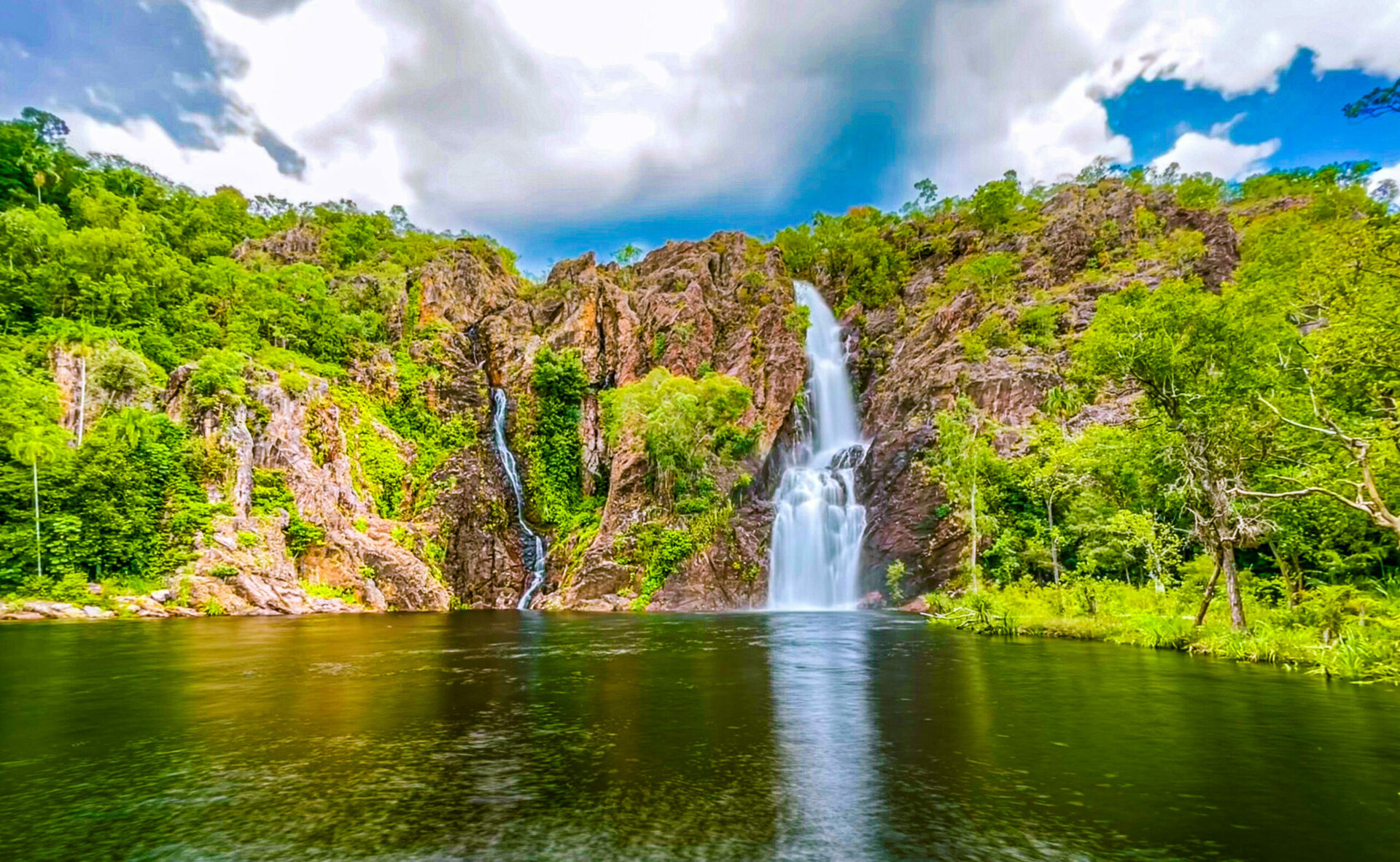
The waterfalls of Litchfield National Park are among its biggest drawcards, with cascading falls like Wangi and Florence creating accessible, year-round swimming spots framed by monsoon forest and rugged escarpments. These falls not only offer a refreshing escape from the heat but also highlight the park’s unique landscape shaped by seasonal rainfall and ancient sandstone formations.
Start planning your trip Litchy on our sister site.
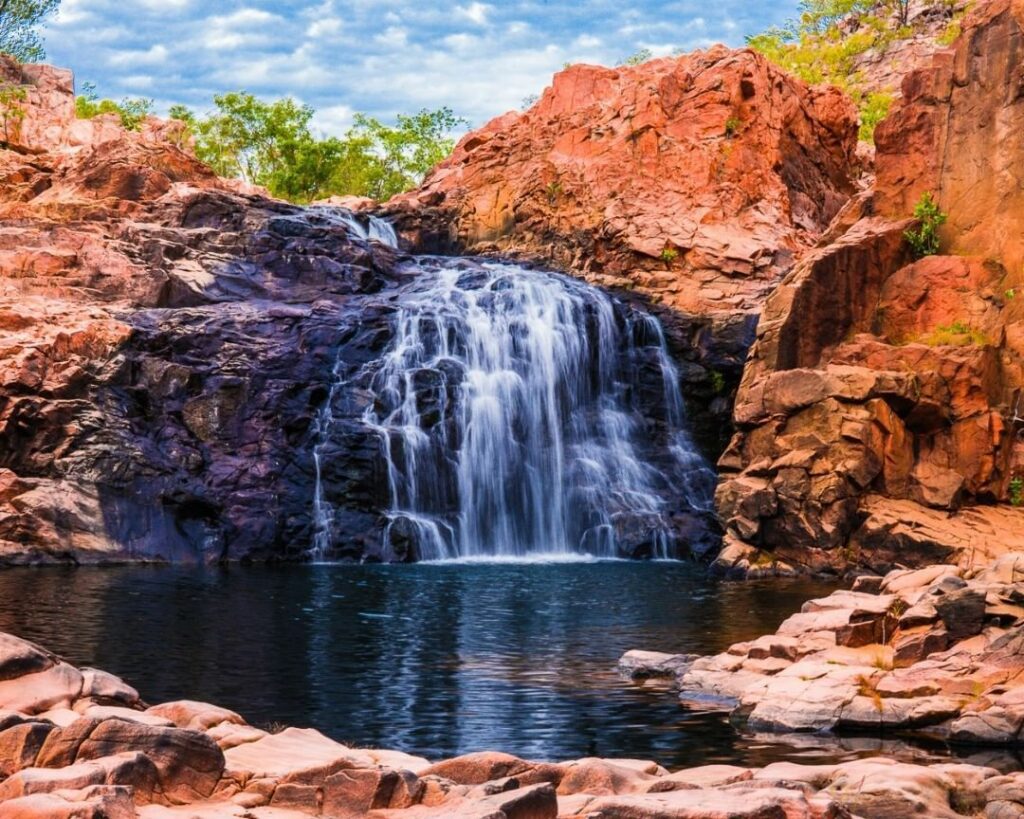
Nitmiluk National Park: Gorge and Cruises
Nitmiluk National Park takes its name from the Jawoyn word “Nitmiluk,” which translates to “place of the cicada dreaming.”
This name reflects the deep spiritual connection the Jawoyn people have to the land, with the cicada playing an important role in local Dreaming stories tied to the creation of the gorge system.
While the area was once commonly referred to as Katherine Gorge by European settlers, the official name now recognises its Aboriginal heritage and cultural significance.
Today, Nitmiluk National Park stands as a powerful example of how traditional names continue to reflect identity, history, and the enduring connection between people and Country.
Uluru- Kata Tjuta: Filled with Story
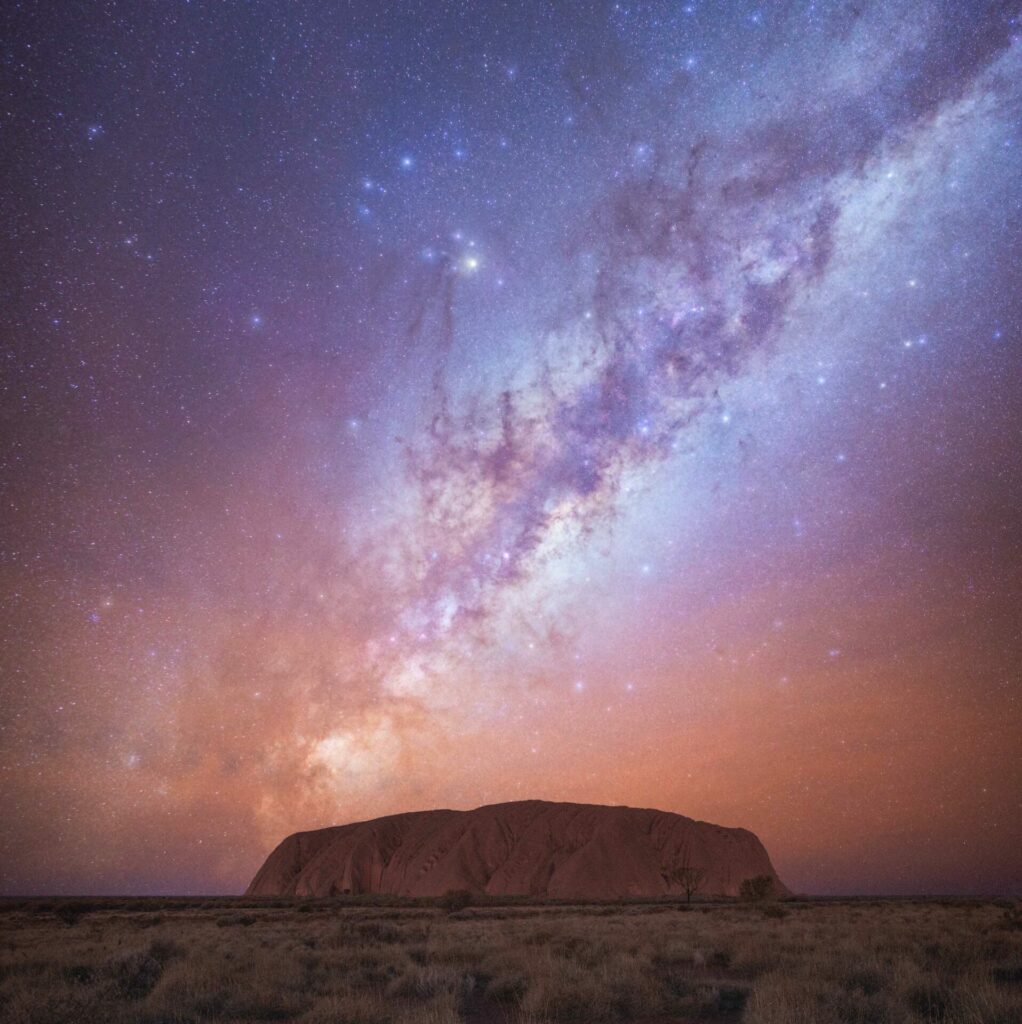
Uluru-Kata Tjuta National Park gets its name from its most iconic feature, Uluru, a massive sandstone monolith that rises dramatically from the red desert sands. The name “Uluru” comes from the Pitjantjatjara language, spoken by the Anangu people, the traditional custodians of the land. For the Anangu, Uluru is not just a landmark—it is a sacred site, central to Tjukurpa, the complex system of law, spirituality, and creation stories that guides life and culture in the region.
Originally, European explorers and settlers referred to the rock as “Ayers Rock,” named after Sir Henry Ayers, a colonial administrator. However, over the decades, there has been a strong movement to restore its traditional name, reflecting respect for the Anangu people and their enduring connection to the land. Today, the dual naming of Uluru/Ayers Rock is recognized, but Uluru is the preferred and widely used name, honoring its Indigenous heritage.
The broader Uluru-Kata Tjuta National Park also includes the nearby Kata Tjuta rock formations, whose name similarly comes from the local language, meaning “many heads.” Together, these names reflect not only the physical features of the park but also the deep cultural and spiritual narratives embedded in the landscape, offering visitors a glimpse into tens of thousands of years of Aboriginal history and tradition.
Check out our accommodation guide for after your iconic Outback adventure.
Watarrka National Park: Best with a Guide
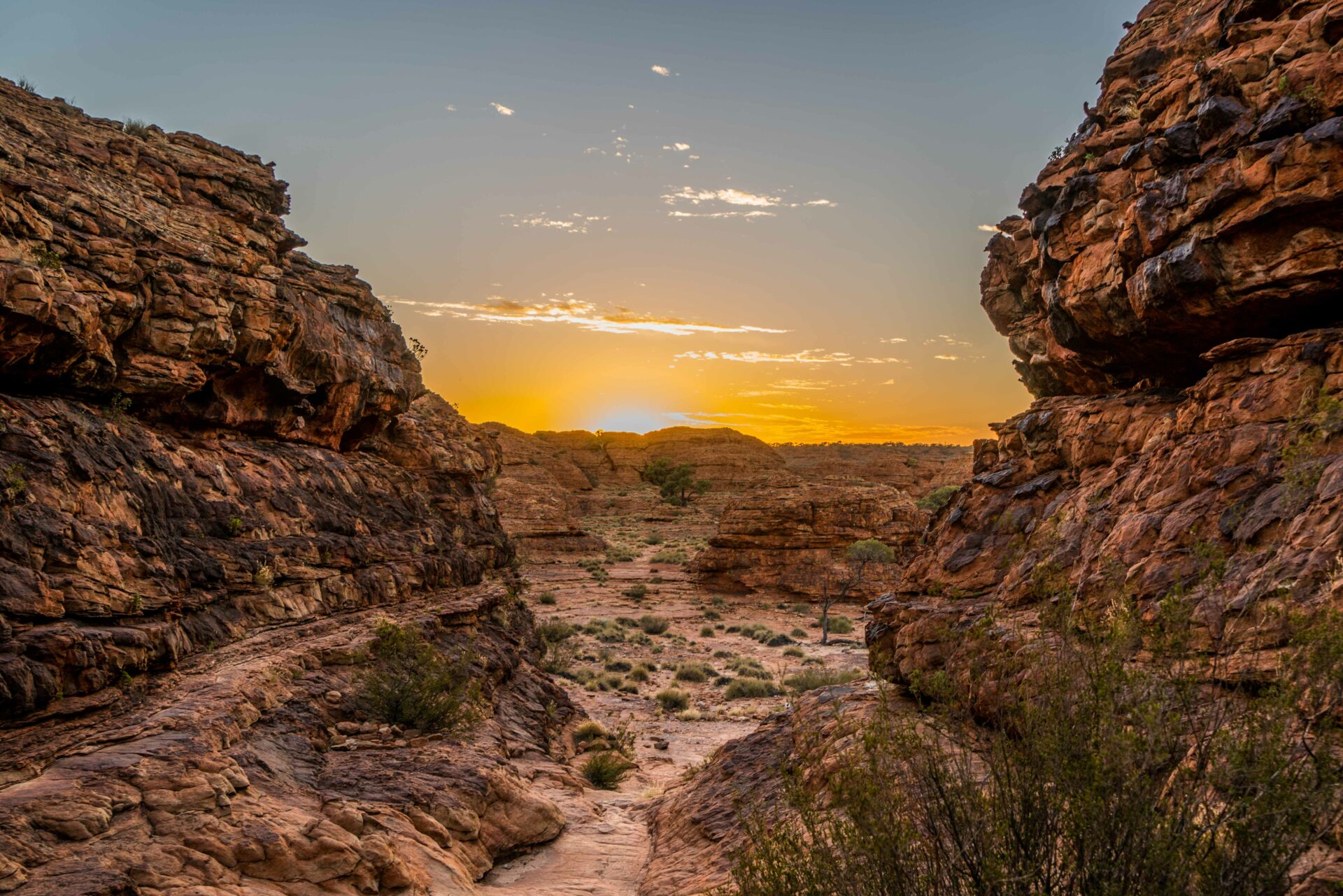
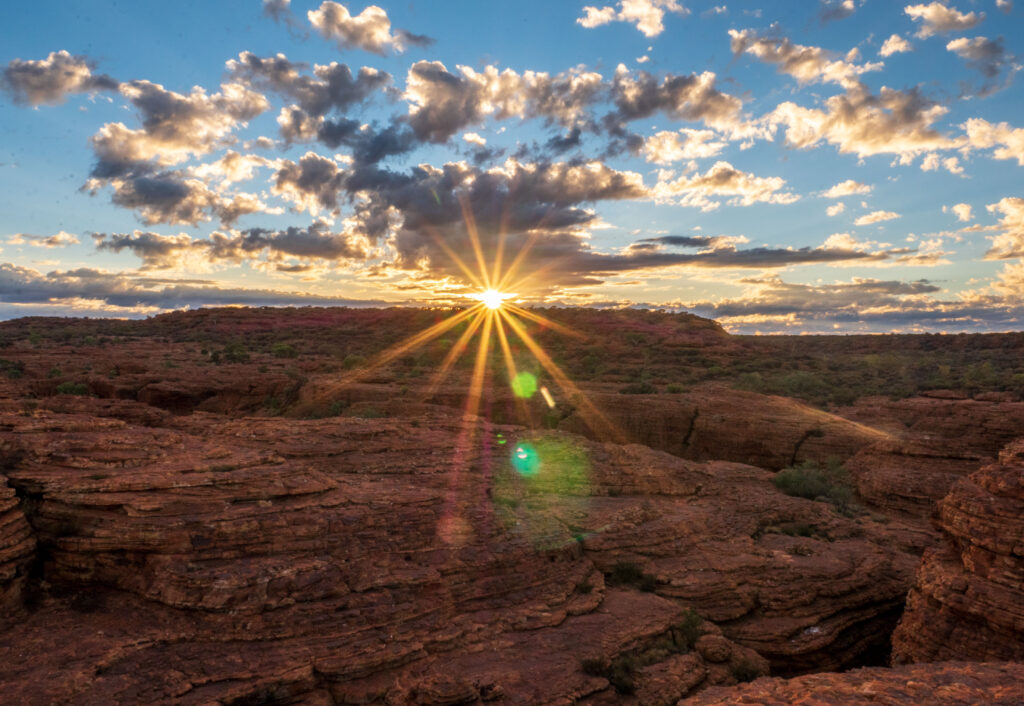
Watarrka National Park takes its name from the Luritja word “Watarrka,” which refers to a type of umbrella bush (Acacia ligulata) found throughout the region. This naming reflects the deep connection between the landscape and the traditional custodians, whose language often draws directly from the natural features and plant life of the area.
While the park is widely known for Kings Canyon—named by European explorer Ernest Giles in 1872 after Fielder King—the official park name recognises its Aboriginal heritage. Today, Watarrka National Park stands as a blend of both histories, with its Indigenous name preserving the cultural significance of the land.
Ready for the adventure? Explore everything Watarrka has to offer.
West MacDonnell National Park: Iconic Hikes
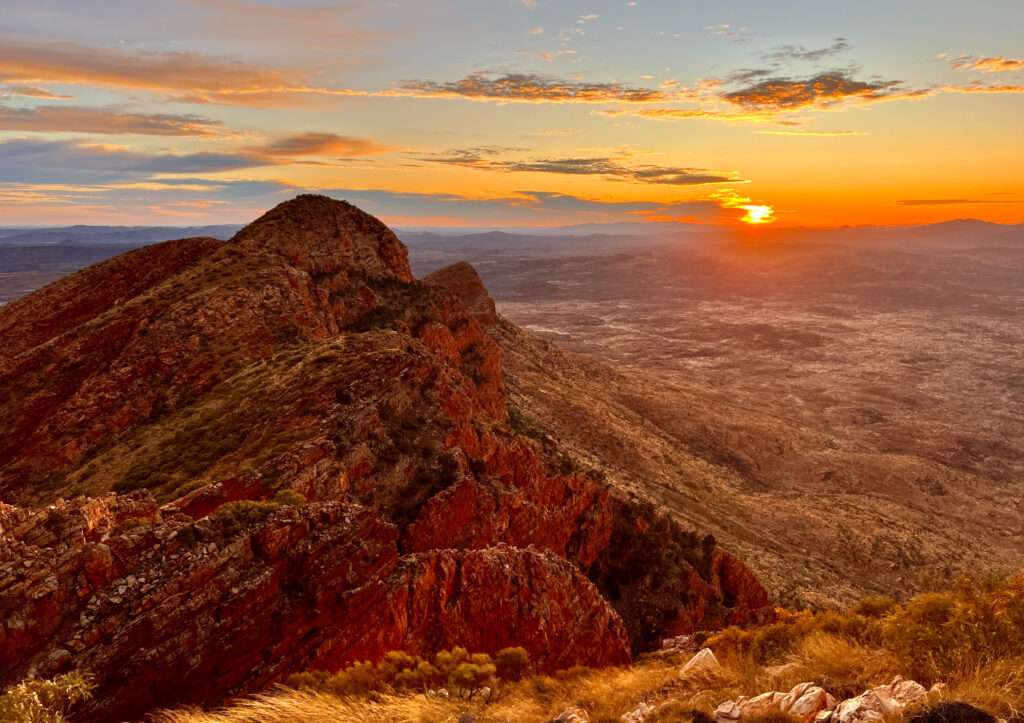
West MacDonnell National Park was named after William MacDonnell, who was a highly respected property owner in the area. It was largely due to his work in promoting and managing the sustainability of the park and its plants and animals. He also helped ensure that measures were in place to reduce erosion, maintain water quality and protect endangered species.
Moreover, William MacDonnell was also heavily involved in protecting sacred Indigenous sites within the park, something that’s now long-established practice but wasn’t always the case.
In recognition of his hard work and dedication to preserving natural beauty and cultural heritage, West MacDonnell National Park was officially named after William MacDonnell in 1995.
There’s more to this story—uncover what makes the West Macs truly special.
From Kakadu to Uluru and beyond, the stories behind each national park’s name offer a deeper way to connect with the landscapes of the Northern Territory. These traditional names don’t just label a place—they reflect thousands of years of culture, language, and a long-standing relationship between people and Country.
As you explore each national park’s trails, rock art sites, and diverse wildlife, understanding the origins of these names can completely change the way you experience them. What might seem like just a scenic stop on a holiday becomes something far more meaningful—a place shaped by history, identity, and ongoing cultural connection.
This guide is just the beginning. As awareness continues to grow and names evolve, it’s clear that these places will always fascinate, reminding us of the importance of recognition, respect, and conservation reserve efforts that help protect both the land and its stories for future generations.
*Cover image by @uplifting.adventures
Get your daily fix of Northern Territory beauty courtesy of Norther® by following @northerhq. You can also check out more Northern Territory content by following Norther on Facebook. Please sign up here to join our newsletter list to be the first to get travel hints and local recommendations for National Parks and Destinations in the NT.
Heading to the NT? Here’s What You Need to Get Started
Travel Insurance
Whether you’re from Australia or across the globe, it’s a great idea to get insurance to cover unexpected accidents or medical emergencies. AllClear and Cover More are our favourite travel insurance providers to give us the peace of mind while heading to the outback.
Flights
For the best deals on flights, we recommend using Trip.com. It’s super easy to compare prices across different airlines and booking sites. I always find great options for my trips, and it saves me so much time and money!
Hotels
We always recommend using Booking.com for hotels. They have a variety of accommodation options and great filters to help you find the perfect place for your trip to the NT. With amazing deals, a great loyalty program, and the largest selection of hotels and rentals, it’s our favourite place to book rooms.
Tours
Tours, either multi-day, half-day, or private excursions, are a great way to experience the NT. Viator has a great selection of activities to help you travel the Territory and learn from locals.
Car Rental
If you're looking to rent a car to explore the Territory on your own, we suggest checking out Budget. It’s so easy to compare prices and find the best option from their huge selection of cars. Or try Rentalcars.com to see cars from all rental companies in the NT.
National Parks Pass
If you live outside the NT and plan on visiting national parks, you'll need a Parks pass. Choose from a day pass, a 2-week pass, 12-month pass, or family pass at NT.gov.au. If you're an NT resident be sure you bring your NT driver licence or proof of residency. Note: Park Passes are not accepted at Kakadu or Uluru-Kata Tjuta National Parks. Purchase those from Parks Australia.
Sim Card
If you're travelling and need a reliable connection, We'd recommend getting an eSIM from Airalo. Choose from data only or cellular connection. It’s super convenient and helps you stay connected without the hassle of swapping physical SIM cards or paying exorbitant fees to your wireless provider.